
Why Does This Coffee Garden Never Stand Alone?
In Ngaduman Village, slow travel means seeing a garden as local people do, not as separate crops, but as a living ecosystem where everything supports one another. Walking alongside local farmers reveals how coffee, vegetables, fertile soil, and generations of knowledge are carefully woven together. Here, a garden tells a story about a way of life, not simply about what it produces.
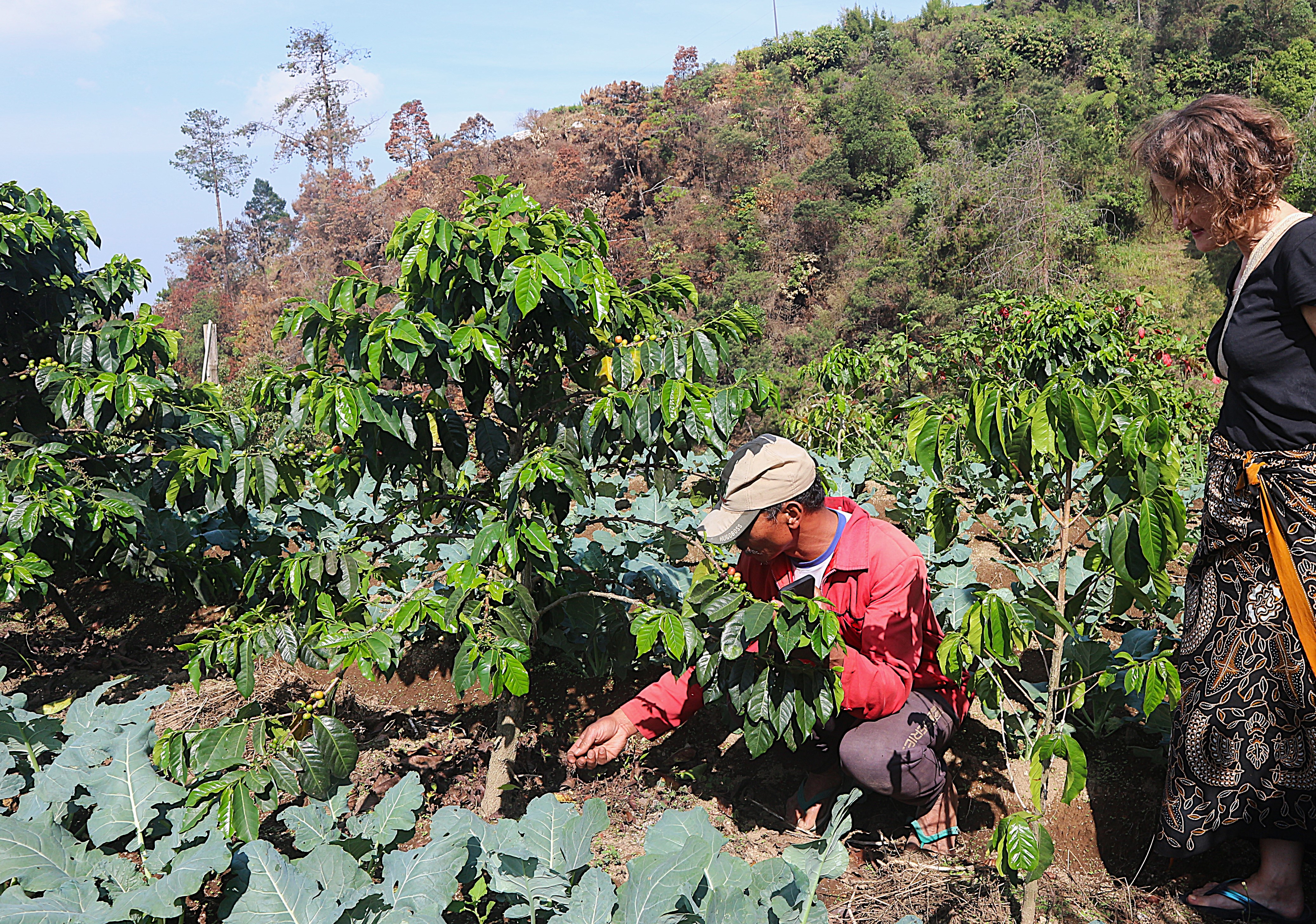
A local villager walks quietly into a coffee garden in Ngaduman Village, on the slopes of Mount Merbabu. Cool mountain air drifts through simple homes, while terraced fields stretch across the hillsides. From a distance, the landscape appears entirely green. A closer look reveals something more: coffee has never been the only thing growing here.
For the people of these mountain villages, farming is more than a livelihood. Vegetables support their families, while caring for the land is a way of life passed down through generations. They believe that every plant belongs within a larger living community.
That belief can be seen throughout the coffee gardens of Ngaduman Village. Coffee never grows alone. Instead, coffee trees share the land with a variety of vegetables in a traditional farming practice known locally as tumpangsari.
Have you ever imagined a world without vegetables? Or today, when coffee has become part of everyday life for so many people, a world without coffee?
For the people here, the answer is not choosing one over the other. Both belong together.
As the world changes, they continue caring for the land while preserving traditions that have guided their farming for generations. Rather than clearing existing trees to maximise short-term yields, they allow different species to grow together, believing that diversity creates healthier and more productive gardens over time.
The older trees remain an essential part of the landscape, serving as the village's ecological lungs and helping preserve water resources.
The gardens of Ngaduman Village show that people and nature do not have to exist in opposition. Natural resources can be used responsibly, allowing communities to meet their needs while maintaining the ecological balance that sustains future generations.
This enduring local wisdom continues to shape farming practices that place long term sustainability alongside everyday livelihoods.
Perhaps one morning you'll walk through one of these gardens beside a local villager. Between the coffee trees and rows of vegetables, you may begin to see that what is being cared for is not only a harvest, but also a lasting relationship between people, land, water, and the living world around them.
Sabato Kaliwuan creates access to everyday life in Ngaduman Village, part of a journey from Central Java to Karimunjawa. Through unhurried conversations with residents, travellers are invited to understand tumpangsari, agroforestry, and the values that continue to shape the way this community lives with the land.
Perhaps the most meaningful lesson from this garden is not how coffee is grown, but why it never grows alone. When diversity is protected, the land continues to flourish, communities endure, and every cup of coffee carries a story far deeper than its flavour.
Sabato Kaliwuan, A Delightful Companion for Your Journey
More than a curated travel experience, Sabato Kaliwuan is your access to authentic villages, meaningful encounters, and local stories that reveal Central Java beyond sightseeing. Through conversations with the people who shape village life, every journey becomes an opportunity to understand how villages are adapting, preserving their heritage, and creating new futures.