
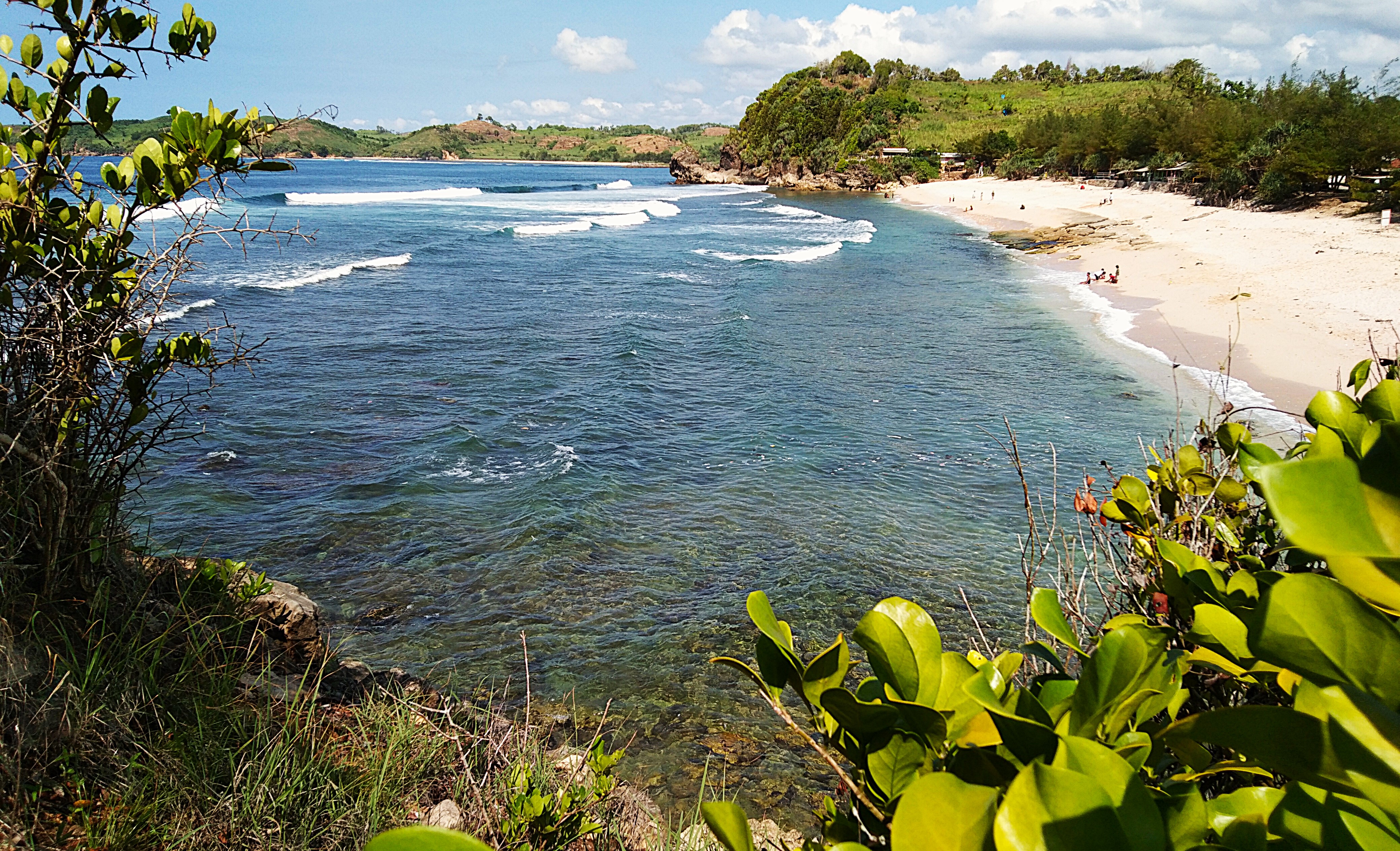
Where the Sea Chose to Stay
Pantai Gondomayit, South Coast of Blitar
At Pantai Gondomayit, slow travel is not measured by how long you stay by the sea, but by how deeply you begin to understand the lives shaped by it. Every returning fishing boat, every conversation at the fish market, and every quiet encounter reveals that the ocean is more than a source of livelihood; it is a place where memory, migration, and generations of coastal life continue to meet.
Along the South Coast of Blitar, the sound of the waves is more than a natural rhythm. For the coastal community, it has long been a language of its own. Pantai Gondomayit is one of the places where that language can still be heard.
Standing on this shoreline, a quiet question naturally arises: Who first chose to live here? Yet the question is not really about identifying the first settler. Instead, it invites us to reflect on something much larger: the journeys, migrations, and search for belonging that have shaped Indonesia's coastal communities for generations.

Around Pantai Gondomayit, fishermen begin their day much as their ancestors once did. Small wooden boats, the day's catch, and the nearby traditional fish market remain part of a daily rhythm that has endured through time.
They are the descendants of seafarers who crossed vast stretches of open sea in search of new shores to call home.
The ancestors of today's fishermen travelled thousands of kilometres across open waters without modern navigation. They relied on the stars, read the winds, understood the tides, and carried knowledge passed down through generations. Alongside those skills, they trusted an instinct refined by years of living with the sea.
Among Indonesia's coastal communities lives an old saying: "Friends with the wind, resting upon the waves." It reflects a way of seeing the ocean, not as an obstacle, but as a lifelong companion.
Even after settling far from their birthplace, their connection to the sea never faded. The routes they once sailed seemed permanently etched into memory. They could return to their homeland and navigate back again, as though the vast ocean had become a familiar path rather than an endless distance.
The fishing village surrounding Pantai Gondomayit today is more than the result of migration. It is a living reminder of human resilience, inherited knowledge, and an enduring relationship with nature.
Walking through the traditional fish market, visitors see an abundance of freshly landed fish. Yet beyond the catch itself lies another story waiting to be imagined.
How far did these fishermen sail? How many nights did they spend on the open sea? How did they navigate changing seasons with only small traditional boats?
These quiet questions reveal that life on this coast has always been shaped by the relationship between people, the sea, the wind, and the boats that connect one island to another.
Pantai Gondomayit is therefore more than a beach. It is a place where journeys became settlements, and settlements slowly grew into a community whose story continues today.
Perhaps one morning you'll find yourself standing on the shore as the fishing boats return from the sea.
Perhaps you'll wander into the traditional fish market, listening to ordinary conversations unfolding beside the morning's catch.
And perhaps, without realising it, you'll discover that the greatest journey here is not your own, but the generations of fishermen whose lives have always been guided by the horizon.
Sabato Kaliwuan , A Delightful Companion for Your Journey
More than a curated travel experience, Sabato Kaliwuan is your access to authentic villages, meaningful encounters, and local stories that reveal East Java beyond sightseeing. Through conversations with the people who shape village life, every journey becomes an opportunity to understand how villages are adapting, preserving their heritage, and creating new futures.
Perhaps the true beauty of Pantai Gondomayit is not found in its coastline alone, but in the people who chose to build their lives beside it.
The sea carried them here.
The wind guided their journeys.
The waves preserved the memory of the places they once called home.
And here, you may come to realise that some journeys never truly end; they simply become a way of life.