
The Whisper of Red Bricks and Kotagede's Embracing Sky
You arrive at this point after a journey that felt relentlessly noisy. Banyuwangi, Malang, and Bromo welcomed you with magnificent landscapes and endless lines of people. Beautiful, without question. Yet amid the crowds, you slowly lost the space to listen to yourself. Until, at last, you paused—if only briefly—in a small town called Blitar.
Blitar does not demand your admiration. It simply invites you to stay. Days pass at an unhurried pace: mornings without rush, warm conversations with Sabato Kaliwuan—a delightful companion for your journey, and direct involvement in the daily lives of local residents. Evening arrives without announcement. There, you learn that travel is not always about how far you go, but how deeply you are present. That small town gently restores a balance of soul and feeling that had quietly gone askew.
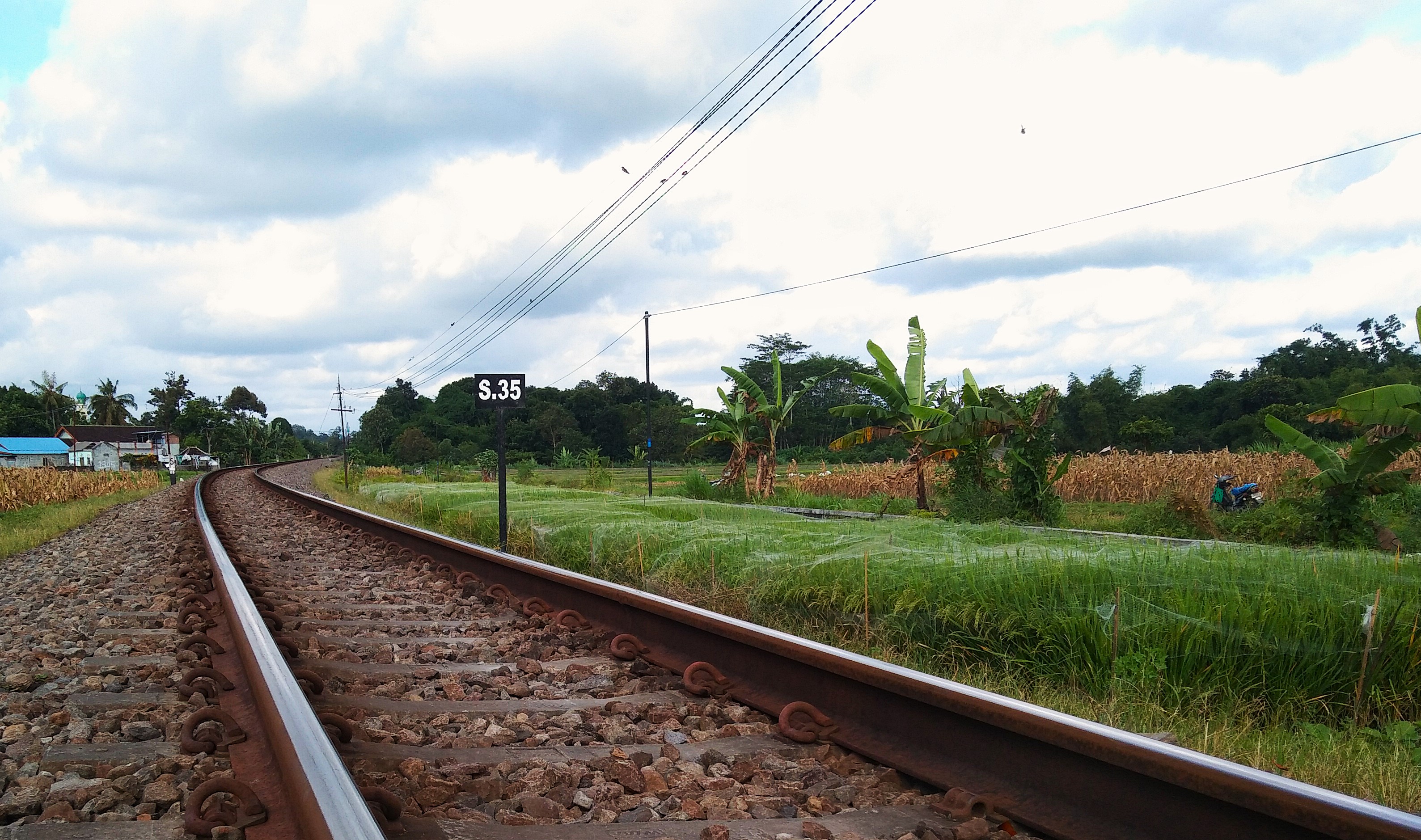
When everything feels whole again, you move on. A train carries you and Sabato Kaliwuan away from Blitar, following long rails toward Jogja. Through the window, rice fields give way to villages, the sky shifts its colors, and your thoughts drift along. There is something eternally magical about traveling by train—it gives time to think, to be silent, to remember why the journey began in the first place.
Jogja greets you with a familiar face. The Palace, Tamansari, Borobudur, Prambanan—great names that never tire of being spoken. You know the crowds will return. But this time, you are not worried. For beyond the spotlight of mass destinations, Jogja holds other spaces—quieter, more honest, and perhaps far more meaningful.

Your steps then lead you to Kotagede.
Not far from the city center, the atmosphere slowly changes. Narrow alleys guide your way, old houses with Javanese architecture stand without any desire to compete with time. The air feels different, heavy with history, yet light on the chest. Kotagede is not a place that seeks attention; it chooses to endure as it is.
Here, in the sixteenth century, the Islamic Mataram Kingdom once pulsed with life. Even now, that pulse can still be felt. The Great Mosque of Mataram Islam stands in quiet composure, surrounded by a wide, shaded courtyard. Javanese architecture shapes its body, while red brick walls embrace it, adorned with Hindu and Buddhist ornaments that remain preserved. Nothing is erased, nothing is forced to disappear.
You may find yourself lingering there. Reading history not from books, but from bricks, ancient banyan trees, and the shadows of the past. Kotagede teaches one essential truth: tolerance is not merely a modern concept, but a lived practice long established. Islam arrived without displacing, ruled without destroying, and coexisted with earlier legacies, embracing all, regardless of race or ethnicity.
In this place, history does not speak loudly. It chooses to whisper. And it is within those whispers that you feel most deeply heard.
In the end, this journey is not only about moving from one city to another. It is about finding rhythm, knowing when to walk swiftly, and when to stop. Kotagede offers you a personal lesson: that what is hidden often holds the deepest meaning, as long as we are willing to slow down and open ourselves to feeling.

“When a Journey Refuses to Rush: Slowing Down in Kotagede, Where the Meaning of Travel Reveals Itself”
You may set foot in Kotagede on a warm morning or a gentle afternoon. As the sun slowly lowers its light, narrow alleys between old houses welcome your steps like an old friend—calm, familiar, unpretentious. Together with Sabato Kaliwuan, “A Delightful Companion for Your Journey,” who makes every journey feel light and filled with laughter, you begin to understand the true meaning of slowing down.
Kotagede is not a city that seeks to impress. It chooses to endure as it is: winding alleys, Javanese-style houses aging with quiet grace, and air that feels heavy with history yet light on the chest. Here, in the sixteenth century, the Islamic Mataram Kingdom once pulsed with life. That pulse can still be felt, in the whisper of every red brick, in each remaining leaf of the ancient banyan trees, and in the long shadows clinging to old walls.
Your steps lead you to the Mataram Islamic Mosque, a place where time seems to slow itself. Its wide courtyard is shaded, offering space to sit for a moment and let your eyes and heart absorb the calm. Red brick walls encircle the mosque, adorned with Hindu and Buddhist ornaments, remnants of history not erased, but carefully preserved. Here, tolerance is not merely a word; it lives in every passing second. Islam arrived without displacing, embracing the legacy of the past, and opening space for anyone who comes with respect.
The Mataram Mosque itself stands not far from the traditional market, about two hundred meters to the southwest, and is one of the oldest non-temple structures in Yogyakarta. Its main roof takes the form of a tajug tumpeng with two tiers, supported by four wooden soko guru. Inside, a pulpit gifted by the Sultan of Palembang, along with the kenthongan and the bedhug known as Kyai Dhondong, add to the character of this sacred place. Behind the mosque lie the graves of the ancestors of the Mataram Kingdom, affirming its profound spiritual value and marking the arrival of Islam in the inland Javanese society once dominated by indigenous beliefs and Hindu traditions.
The history of the Mataram Mosque is written into every detail—from the gapura, the copper mustaka crowning the roof, to the water pools surrounding the veranda, symbols of purity and coolness. Centuries have passed, and the mosque has endured many restorations: the great fire of 1919, contributions from silver merchants, and major renovations prior to the 2006 earthquake. Each change continues to honor the old legacy, making the Mataram Mosque a living witness to how history, faith, and culture can coexist in harmony.
In Kotagede, you learn that travel is not always about speed. Sometimes, the most valuable moments come from stopping, listening to the whispers of red bricks, gazing at ancient banyan trees, and allowing history to teach you the meaning of tolerance, serenity, and respect. Here, among narrow alleys and a silent past, you discover the true meaning of the journey: that moving slowly does not mean being left behind, but creating space to truly be present.

Toponyms in Kotagede
Meaning and Space
Every place, in truth, holds a story. Yet that story only becomes audible when we are willing to listen to its name.
In the sacred text of Islam, it is told that humanity’s superiority over other creatures, even over the angels—began with a singular gift: the ability to name. Adam was taught the names of all things, countless in number, some unknown even to the angels themselves. This primordial knowledge is known as al-ma‘lumat as-sabiqah—an original knowing that became the foundation of human civilization.
Since then, humans have never stopped naming. We give names to whatever we consider important and meaningful. From microscopic entities invisible to the eye to stars scattered across the vast sky, everything is given an identity. Naming becomes a way for humans to understand the world, and at the same time, to mark their presence within it.
Imagine a world without names. Landscapes would be nothing more than tangled forms without orientation. We would not know how to call our own dwelling, let alone recognize the spaces belonging to others. This is why places—homes, neighborhoods, villages, roads, and the corners of lived space, were among the earliest and most essential things to be named.
This act of naming space is what we know as toponymy. It is not merely a geographic label, but a trace of the intimate relationship between humans and the spaces they inhabit. From the moment humans first settled, they named their places—as a way to recognize, to claim, and to give meaning.
Kotagede is one such space that preserves these traces of naming with remarkable clarity. Its names emerged from various ways humans read and interpret their surroundings. The simplest method was to mark prominent natural features. Names such as Kotagede, Bukittinggi, or Pasir Putih seem to speak for themselves, without lengthy explanations—telling stories of size, elevation, or the appearance of landscapes once seen by those who named them.
Other names, however, were born from the social life of their inhabitants. Kampung Jagalan, for example, honestly signals the occupation of its early inhabitants—people who worked as animal butchers. Meanwhile, Krapyak carries the memory of Pangeran Krapyak, a figure whose name remains firmly attached to the area, as if waiting to be told again.
To walk through Kotagede is, in essence, to read a map of stories. Every kampung name, every corner of space, is a small doorway to the past—toward narratives of nature, labor, figures, and ways of life that shaped it. Kotagede is not merely a place to be visited, but a space to be listened to, as long as we are willing to ask its names to speak.

Naming Kotagede
The name Kotagede sounds simple, almost predictable in its meaning. In Javanese, Kotagede means “the big city”—in krama inggil, it is known as Kitha Ageng. A designation that carries quiet confidence, as if from the very beginning this place was destined to become something important.
Dutch and Latin writers of their time, such as Van Mook, recorded it as Koeta Gede. This was not merely a matter of spelling—of oe later becoming u—but a marker of an era when two separate words gradually merged. From a descriptive phrase—“a big city”—it transformed into a single, unified name: Kotagede. A name that no longer pointed only to size, but to identity.
Interestingly, historically the term Kota-Gede had already been known since the time of Ki Ageng Pemanahan. Yet in that period, gede seems to have functioned more as a hope than a reflection of reality. When compared to the port cities along the northern coast of Java—already established, bustling with trade, and serving as nodes of international commerce, the capital of the Islamic Mataram Kingdom appeared modest. It was neither crowded nor physically grand.
But history works slowly. The rulers of Islamic Mataram who followed began to expand the territory and strengthen the city’s fortifications. The once unassuming town was gradually prepared for growth. The aspiration of becoming a “great city” began to take shape, even if it had not yet fully materialized.
Sultan Agung, the great-grandson of Ki Ageng Pemanahan, seems to have read the direction of the times differently. He no longer viewed Kotagede as a city that needed to grow larger in a physical sense. Whether driven by strategic, political, or spiritual considerations, Sultan Agung moved the capital to Kerta—not far from Kotagede. From that moment on, Kotagede no longer held the status of a political center.
Yet it is precisely there that its story becomes compelling.
As its political role faded, the meaning of Kotagede grew stronger. To the west of the Mataram Mosque, the founders of the Islamic Mataram dynasty were laid to rest. Kotagede transformed into a space of memory, a place where history resides and prayers find their anchor. Pilgrims come not to witness a vast or magnificent city, but to feel the traces of the origins of a great dynasty.
Here, gede finds its truest meaning. Not in territorial expanse or the number of settlements, but in essence. Kotagede is a “big” city because of its meaning—because of its history, because of the memories it holds, and because of the stories that continue to whisper through its alleys to this day.
To walk through Kotagede is not merely to traverse an old district. It is a journey into the meaning of a name, an exploration of a city that is “great” not because of its size, but because of the soul it carries.

Dhondongan
Sabato Kaliwuan leads your first steps toward the Masjid Gede Mataram Kotagede, guiding you through a small kampung that almost escapes notice—Kampung Dhondongan. Located directly in front of the mosque, with only a limited number of houses, it feels as though from the very beginning it was never meant to be crowded, but rather to stand faithfully as a guardian.
The most striking marker of this kampung is an ancient banyan tree known as Nyai Panggung. Believed to be more than four centuries old, its aerial roots hang gently, its trunk stands firm, and its presence feels like a silent witness to the passing currents of Islamic Mataram history. In the past, Nyai Panggung had a companion—Kyai Roso. That banyan tree fell in 1990, leaving Nyai Panggung standing alone, like the last guardian who remains loyal to her post.
The name Dhondongan itself carries a story. It refers to the place where the abdi dalem Dhondong and their families once lived. These modest houses were built facing the mosque complex and the pasareyan, marking not only physical proximity but also the spiritual closeness of the abdi dalem to the sacred heart of the kingdom.
When the Mataram court was divided into Surakarta and Yogyakarta in 1755, Kampung Dhondongan also found its role split. The abdi dalem Dhondong were separated into two groups. They later settled in rows of houses flanking the entrance gate of the Masjid Gede. The northern side of the road became home to the abdi dalem of the Kasunanan Surakarta, while the southern side was occupied by the abdi dalem of the Kasultanan Yogyakarta. A quiet division, yet one deeply laden with historical meaning.
Yet Dhondongan is more than a kampung of abdi dalem. Behind the walls of its houses, the soft rhythm of metal being tapped can still be heard today. This kampung is also home to silver jewelry artisans—craftsmen who remain faithful to manual techniques passed down from generation to generation. From their hands were born the silver ornaments that once sustained Kotagede’s juragan perak, and even contributed to the renovation of the Masjid Mataram itself.

In Dhondongan, history is not merely remembered, it is experienced. Here, visitors can take part directly in the process of making jewelry: rings, necklaces, souvenirs, or other designs shaped by their own imagination. Guided by skilled home-based artisans, you work with traditional tools, through a process that is entirely manual.
Each strike of the hammer, each delicate incision, becomes part of a deeply personal experience. The time required depends on the complexity of the design. For simple jewelry with minimal ornamentation, the process takes approximately two to three hours, enough time to feel the pulse of old Kotagede, still beating to this day.
Come to Dhondongan. Sit for a moment beneath the shade of Nyai Panggung. Listen to stories that are not always spoken aloud, and return home carrying not only silver jewelry, but an experience that lingers long after the journey ends.
 Source: https://anomparikesit.wixsite.com/
Kudusan
Approximately one hundred and seventy-five meters west of Kotagede Market lies a kampung whose name seems to carry echoes of past devotion: Kudusan. Its distance is short, yet the story it holds leads us deep into the spiritual heart of the Islamic Mataram Kingdom.
In the past, Kudusan was a settlement for the abdi dalem of the Mataram Kingdom who played an essential role in managing the Masjid Besar Mataram. They were not ordinary servants, but penghulu, figures entrusted with religious rituals, leading prayers, and serving as imams of the mosque. Their lives pulsed in rhythm with prayer times and the sacred ceremonies of the kingdom.
These penghulu were settled on the northern side of the Masjid Besar Mataram, under the leadership of a figure known as Kyai Kudus. He was deliberately brought from Kudus, a region long recognized as a center of Islamic scholarship and strong religious tradition. From this origin, the name Kudusan took root—not merely as a place name, but as a marker of lineage and religious authority.
Yet history is never entirely still. Over time, changes unfolded. The last of the penghulu abdi dalem eventually settled in Kampung Sayangan, also located to the north of the Masjid Besar Mataram complex. Even so, collective memory did not simply shift along with physical relocation. The area continued to be known as Kapenghulon—the place of the penghulu, a name that endured beyond spatial and administrative change.
Walking through Kudusan today, one may see only a quiet kampung, far removed from the bustle of the nearby market just a few steps away. But if we slow our pace, the kampung seems to whisper of a time when prayer, knowledge, and spiritual authority were tightly intertwined. Kudusan invites visitors not merely to see Kotagede as an old town, but as a living space where religion, history, and human life continually shaped one another.
Come to Kudusan. Feel the pause of silence amid the noise of the market. There, the traces of the penghulu still linger—settled within names, spaces, and memory.

Alun-alun
If you stand to the south of Kotagede Market and look east toward the Masjid Agung Mataram, it may be difficult to imagine that this area was once the heart of the open public space of the Islamic Mataram Kingdom. The kampung now known as Alun-alun is widely believed to occupy the former royal alun-alun. Exactly when this space changed its function is no longer clearly recorded. What is certain is that the transformation occurred long after the Islamic Mataram Kingdom had truly faded from the stage of history.
The term alun-alun itself carries an evocative story. It is said that during the era of Islamic Mataram, the alun-alun was covered with sand. When the wind blew, the sand formed gentle ripples, resembling the rolling waves of the sea. Even when the wind subsided, traces of those undulations remained visible on the surface. From this phenomenon, the people came to call it alun-alun—an open space where the sand seemed forever to ripple.
Yet not all of these historic alun-alun have survived. The successors of the Islamic Mataram Kingdom have lost several of them. Alun-alun Plered, Alun-alun Kerta, and Alun-alun Kotagede now exist only in name. Their toponyms endure, but the open spaces themselves have long since disappeared. If you set foot in this area today, you will no longer find a wide expanse of land befitting its name. Instead, you encounter a contrasting scene: densely populated neighborhoods, narrow and quiet alleys, and an atmosphere that seems to invite time to move more slowly.
And yet, it is precisely there that the charm lies. These silent lanes create a contemplative mood, calm, shaded, and layered with meaning. Along the paths, traditional houses with Javanese architecture stand with quiet elegance, many of them carefully maintained, as if still guarding the dignity of a space that was once so significant.
In this area, you can pause at a traditional Javanese house, with a spacious pendopo and an atmosphere that soothes the mind. Sitting beneath the old wooden structure, letting time slow down, imagination drifts easily into the past. A cup of warm drink and light refreshments accompany intimate conversations—about history, about the philosophy of Javanese architecture, and about the life that once pulsed through this space.
Here, the soul of Kotagede feels most honest. Your visit is far removed from the clamor of mass tourism. There is no noise, no crowds put on display. What remains is a quiet simplicity—a space that invites you to pause, to slow down alongside buildings and surroundings that never ask to be admired, yet are always ready to be understood.
Amid the constant bustle of Yogyakarta, Kampung Alun-alun offers a different kind of experience: savoring silence, and discovering depth in a place that is almost forgotten.

Brobosan
In Kotagede, journeys rarely move in straight lines. They turn, narrow, and suddenly open into new spaces. One such way is called a brobosan.
A brobosan is a long, narrow alley that serves as a connector between different areas of Kotagede. It slips between tightly packed rows of houses, as if quietly cutting through the old settlement almost unnoticed. This passage can be accessed from Kudusan, Dhondongan, and the Masjid Mataram area, then continues through to Kampung Alun-alun.
Anyone who walks through it feels as though they are cutting through. In Javanese, this act is known as brobos—to pass swiftly through a narrow gap. From this word comes the name brobosan. It is not a main road, nor a prominent route, and it is precisely this modesty that defines its charm.
For the people of Kotagede, the brobosan is a strategic path. It functions as a shortcut, or nyidhat, allowing one to reach a destination more quickly. From Kampung Alun-alun, a person can nyidhat toward Kotagede Market through this alley. Or in the opposite direction—from the market to Kampung Alun-alun, then onward to Dhondongan, the Masjid Mataram, the burial grounds of the founders of Islamic Mataram, and finally to Kudusan. A single small corridor, connecting many stories.
Yet the brobosan is not merely about efficiency of distance. It is a symbol of how Kotagede is meant to be understood. Kotagede is not a place to be rushed through, but a space to be experienced. Here, toponyms are not just names, but invitations—to slow down, to trace the history of Yogyakarta, especially the history of Kotagede, with a more mindful pace.
Walking through a brobosan, time seems to loosen its grip. The old house walls on either side, brief greetings from residents, and a familiar quiet create an experience that cannot be found in crowded, fast-moving tourist destinations. In Kotagede, travel is not about who arrives first, but about who is willing to pause.
Here, you discover the true meaning of a journey. Not merely arranging an itinerary, but allowing space for a weary soul to rest. Slowing down, recharging, and stepping forward again with renewed energy, carrying fresh ideas into the next journey.
Passing through a brobosan, you are not only moving from one place to another. You are learning another way to travel.

Ngaduman: Learning Silence from the Slopes of Mount Merbabu
After slowing down in Kotagede, it is there that you begin to understand that a journey is not merely about arranging an itinerary. Travel is about creating space for a weary soul to rest—to slow down, to recharge, and then to move forward again with renewed energy and clarity. Yet the journey is not over. From Kotagede, Sabato Kaliwuan guides your steps onward to one of the most popular destinations in Java: Borobudur Temple.
At Borobudur, grandeur satisfies both the eye and instinct. Thousands of visitors from across the world fill the temple grounds. You are awed—but beneath that admiration, perhaps a quiet inner whisper arises: if only this place were quieter, I could experience it more deeply. That small unease later finds its answer in the next leg of the journey, as Sabato Kaliwuan leads you to Dusun Ngaduman, perched high on the slopes of Mount Merbabu.
There are places that do not call out loudly. They do not put up grand signboards, do not compete to go viral, and do not feel the need to explain themselves. Ngaduman is one of them. It simply exists—silent, elevated, and faithful to its own rhythm.
This small hamlet rests on the northern slopes of Mount Merbabu, at an altitude where the breath of the city is left far below. When morning arrives, Ngaduman is not awakened by alarms or horns, but by mist that slowly drifts, as if drawing back a stage curtain. Trees emerge one by one, village houses settle into the cold air, and life begins without haste.
Coming to Ngaduman is not about seeking “beautiful” scenery—you will find that easily enough. What matters more is a shift in perspective. Here, you learn that a village is not an exotic backdrop, but a complete living space, with its own knowledge, labor, and wisdom.
The people of Ngaduman live by the land and the seasons. Some work as vegetable farmers, while others tend to Arabika coffee, which grows patiently along the mountain slopes. Coffee here is never rushed. It follows the weather, the mist, and the patience of human hands. There are no hurried production targets, no ambition to conquer nature. What exists instead is a quiet agreement between people and the land: to care for one another so that both may endure.

Accompanied by Sabato Kaliwuan, you can stay in villagers’ homes, where the boundary between guest and host gently dissolves. You wake to the sounds of the kitchen, join them in the garden, walk along the slopes, and come to understand that village life is not something to be displayed, it is something lived. Roasting coffee in the kitchen is not an attraction, but a routine passed down through generations. Smoke rises slowly, coffee beans are patiently turned using wooden tools, and stories flow without being prompted: of a good harvest, of fog that came too thick, of a life that feels sufficient when lived with an understanding of limits.
Coffee then appears not as a product, but as a connector. In a small cup, there is damp soil, mountain air, and collective labor that often goes unseen. To sip it is not about judging flavor, but about giving yourself time to be fully present—without screens, without schedules, without demands.
Walking toward the coffee gardens becomes a journey that teaches one essential lesson: not every step needs to lead to a destination. Sometimes, the act of walking itself is enough. The dirt paths, birdsong, and wind brushing through leaves all serve as reminders that the human body and mind also need space to slow down.
On the veranda of a villager’s house, you can sit for a long time without feeling guilty. No one asks about the next agenda. The mist arrives and departs on its own terms. Conversations emerge, fade, and return again. It is there that Ngaduman works quietly, restoring humans to a more honest rhythm.
Ngaduman is not a place to be “visited” and then left behind. It is better understood as a place to experience a pause. A space where you are not required to be anyone, not expected to be productive, and not asked to explain anything. You only need to be present.
And when you finally descend from the slopes of Mount Merbabu, you carry home not merely memories or coffee, but a new way of seeing villages, journeys, and yourself. That is when Ngaduman truly begins to work.
Not as a destination.
But as an experience that quietly transforms you.
Sabato Kaliwuan: A Delightful Companion for Your Journey

From Mist to Waves: When a Journey Teaches Us How to Be Human
In Ngaduman, the journey begins with silence.
Mist descends slowly along the slopes of Mount Merbabu, veiling footpaths, softening sounds, and inviting us to listen again—not with our ears, but with our senses. Life there moves in rhythm with the seasons: soil is cultivated patiently, coffee is roasted in its own time, and people greet one another without haste. The mountain teaches steadfastness—about planting, waiting, and accepting.
Yet the journey with Sabato Kaliwuan does not end on a quiet peak.
Instead, it leads us downward, moving through time, until we finally meet the sea.
From damp, cool earth, our steps turn toward the blue horizon. From vegetable gardens and coffee groves on the slopes of Merbabu, the journey continues to a cluster of islands embraced by salty winds and waves that never tire of telling their stories. Karimunjawa awaits—not as a contrast, but as a complement.
If the mountain teaches us how to take root, the sea teaches us how to let go.
In Karimunjawa – Desa Nyamplungan, life is not governed by planting seasons, but by tides. Fishermen read the sky as farmers read the soil. Wooden boats replace footpaths, and the open horizon becomes a boundary that is always shifting. Maritime culture grows out of courage, out of trust in a vast nature that cannot always be predicted.
Yet a delicate thread binds these two worlds.
In Ngaduman and in Karimunjawa – Desa Nyamplungan, people live alongside nature—not to conquer it. Hospitality is born not from luxury, but from an awareness that life can only be lived together. The warmth found on the mountain slopes is reflected in the sincere welcome of island communities. Different in form, one in spirit.
This journey with Sabato Kaliwuan is not merely about moving from one place to another, but about widening perspective.
From the stillness of the mountains to the liveliness of the waves, from agrarian culture to maritime life, from planting to setting sail—we are invited to understand that Indonesia is not singular, but mutually reinforcing. That the meaning of travel is not always found within a single landscape, but in encounters across nature and culture.
And when the mountain has offered calm, the sea arrives as the perfect closing—cleansing, releasing, and completing.
From the mist of Merbabu to the blue of Karimunjawa – Desa Nyamplungan, this is a complete journey: rooted on land, then sailing onward with a more expansive soul.
There are journeys that end when the suitcase is closed.
And there are journeys that truly begin when we sit cross-legged in someone else’s home, sipping a cup of warm coffee or tea we never ordered, and feel—without realizing it—fully welcomed.

Desa Nyamplungan
In Karimunjawa – Desa Nyamplungan, you learn that luxury does not always take the form of objects.
It appears instead as a gentle greeting, a smile that does not ask where you come from, and open hands that do not calculate profit or loss. The Javanese call this semanak—a way of receiving others as fellow human beings, not merely as guests.
You arrive as a newcomer. Without needing to show who you are. Without titles, without labels, just as a fellow human being. And it is precisely for that reason that you are accepted.
This island does not welcome you with billboards or grand gateways.
It welcomes you with quiet.
With an unhurried sea, wind carrying the scent of salt, and a fisherman named Bapak Pri—who asks little, yet quickly prepares a place to sit. As if to say, “Monggo, here you are safe”.
His house is simple, so simple that the city might call it “lacking.”
Yet inside, there is something rarely found in five-star hotels: a sense of belonging.
Mats are spread not as formality, rice is served not as hospitality, but as an invitation to live together.
Days unfold without agendas. There is no clock to chase.
Only rhythm: the tide rising, children returning from school, coffee slowly brought to a boil.
Here, time is not something to be spent, but something to be accompanied.
Conversations are not meant to impress.
Nothing is exaggerated.
Only stories of the sea—sometimes kind, sometimes harsh.
Of life that is not always fair, yet always possible to live with patience.
You listen—not as a tourist, but as a human being relearning how to understand life.
When the wooden boat drifts away from the shore, you realize something:
this journey is not about seeing Karimunjawa – Desa Nyamplungan,
but about allowing yourself to be seen by its people.
There is no performance, no posing, only the courage to be fully present.
Beneath the sea, coral and fish do not recognize the status of newcomers.
They accept without conditions, just like the people on land.
In that moment, you understand: nature and culture here breathe in the same rhythm.
To respect the sea is to respect life.
To honor a guest is to honor one another.

We Eat Together
In the evening, we eat together and share stories. No long tables, no seating rules. Simple plates become the base, laughter the bond.
You are invited to go out to sea, looking for anchovies or practicing ngobor—a traditional way of catching fish using a simple spear fashioned from bicycle spokes. The focus is not on the catch, but on the experience of the process itself.
Your mistakes are answered with smiles, not judgment.
That is where you begin to understand: differences are not meant to be uniformed, but celebrated.
In Karimunjawa – Desa Nyamplungan, hospitality is not a profession.
It is an inheritance. Children are not taught how to welcome guests, they grow up inside that practice. Elders do not speak about tolerance—they live it, every single day.
You return home carrying little.
But you bring back a shifted perspective—about villages, about Javanese culture, about what a journey truly means.
Accompanied by Sabato Kaliwuan, luxury turns out not to be about the ability to buy anything.
Luxury is being invited into other people’s lives without having to pretend.
Luxury is sitting as equals, sharing stories, and returning with a changed heart.
Not everyone is willing to experience this kind of luxury.
Because it demands one thing: the humility to learn, and the courage to be fully present.
And if one day you grow weary of journeys that only take photographs,
perhaps this is the moment to come to places like this—not to be served, but to become part of life itself.
Sabato Kaliwuan: A Delightful Companion for Your Journey
Tag: adventure, banyuwangi, blitar, blitarstopover, bromo, coffe, culture, eastjava, ecotourism, familytravelers, indonesiaspicingtheworlds, jogja, karimunjawa, kotagede, local, malang, nature, ngaduman, redefineluxury, sabatokaliwuanvibes, slowtravel, soekarnolegacy, spice, traditional, train