
Spending Time in Blitar is Not About Filling an Itinerary, But About Filling the Heart.
Blitar, Recharging the Spirit
“Blitar: Tracing Soekarno Through Taste”
Spending time in Blitar is not about filling an itinerary, but about filling the heart.
Every city has a pulse that keeps it alive. In Blitar, that pulse beats in every village, flowing through the everyday lives of its people. On a slow morning, when the sun gently strokes the hilltops with its golden light, Blitar opens itself like the first page of an old book that still smells of damp earth. Here, time doesn’t run; it walks softly, in rhythm with the whispering breeze brushing through teak leaves, coffee blossoms, green pepper clusters, the shy budding vanilla vines, the brownish nutmeg fruits contrasting with their leaves, and the cardamom pods gathered in tempting little bunches.
As you step into the quiet villages of Blitar, you feel as if you’re being invited to finally let go of the burdens of an itinerary that has unknowingly stayed lodged in your mind—replacing it with deeper, longer, more honest breaths.
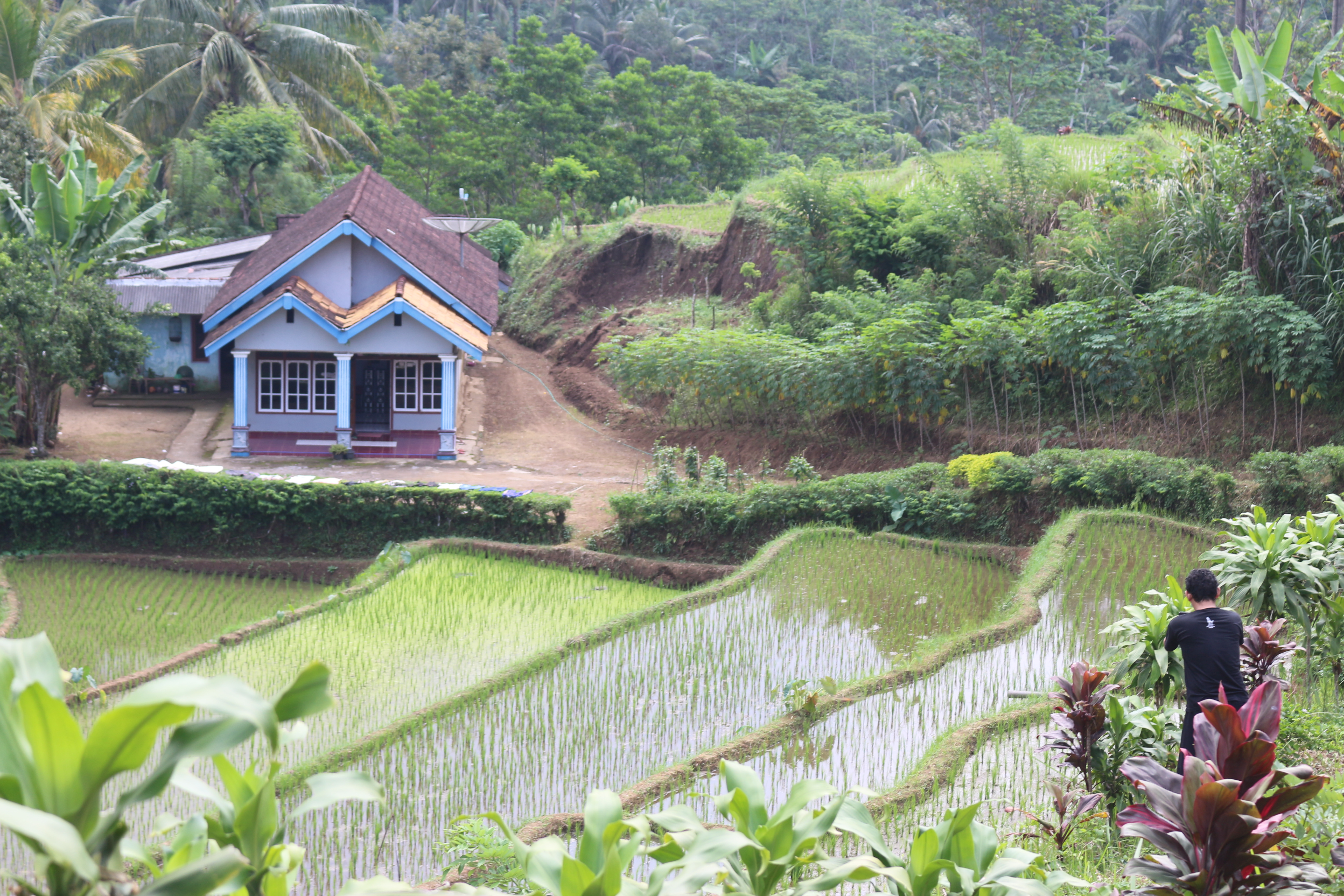
You spend a few days living in the simple homes of local residents, becoming a part of their daily life, with a terrace that faces rice fields stretching as far as your eyes can see. Each morning, the sound of birds, chickens, goats, cows, even insects, and the drifting aroma of cooking smoke from the kitchen aren’t just signs that the day has begun, they are gentle invitations to start feeling alive again. There are no incoming notifications, no tight schedules, no meetings waiting; only the aroma of freshly brewed kopi tubruk and neighbors greeting each other like old family. In this village, your body gradually loosens, your spirit settles, and your mind, usually crowded with the anxiety of a packed itinerary, finally grows quiet, even if only for a moment.

Perhaps, for the first time in a long while, you walk without rushing.
You trace the edges of rice fields still wet with the remnants of night, letting your feet and the hems of your pants brush against the dew that rolls slowly like tiny seeds of hope. In the distance, children’s laughter rings out as they run for no reason other than joy; on the other side, farmers work with calm determination, their movements slow yet full of meaning, as if every rice stalk they touch is a prayer for life to continue.
The sky above Blitar feels wider than any memory you brought from the city—a vast, open space where you can finally set down the exhaustion you never had time to tidy away.
There is a peace that cannot be explained, a silent embrace from nature, reminding you that life, after all, is gentler than you once believed.
And when planting season arrives, you won’t be able to resist their invitation.
There is something in the way they call you, perhaps a warm smile or a small nod, that makes you step into the rice field barefoot. The moment your skin touches the warm-cool mud, there is a sensation beyond words: as if the land is welcoming you, allowing you to become part of its living pulse. You pull up the seedlings ready to be planted, feeling them tremble softly in your left hand while your right hand moves instinctively—taking, planting, and returning the seedlings to the soil that will care for them.
In those moments, you whisper in your heart,
“Is this what fertile land truly feels like?”
Not just seen, but touched and felt through your own hands and feet.
Your steps move backward slowly, learning to balance as the mud gently holds your feet. You lift one foot carefully and place it in a new spot, pressing it down so you won’t slip. Your body moves in a simple rhythm: bending down, planting, standing up again to breathe. Now and then your hand rises to your forehead, wiping away the thin layer of sweat brought by the morning sun, sweat that feels truer than any you’ve ever produced behind an office desk.
Mud clings to your feet, your pants grow wet and dull, yet somehow your lips never fail to curve into a smile.
When it’s time to rest, you sit with the farmers on a small footpath near the field, opening the simple lunch they brought from home. They pour boiled water into old enamel cups, more refreshing than any cold drink in the city. They share food without counting: a slice of tempeh placed in your hand, a packet of rice passed to the person beside you, a bottle of drink offered to those working in the next plot.
Look at the way they smile.
Sincere, unmasked, without shame, without dining tables, without forks, without matching glasses.
Here, nature is luxury.
Togetherness is luxury.
And blessings, shared while sitting on the bare earth, are a kind of luxury no city can ever match.
They eat while sharing stories, laughter, hopes, even prayers, without needing to raise their hands to the sky.
In this village, luxury is not what you own, but what you can give.
And in Blitar, you will learn that sincerity is the most fertile gift that grows from its land.
 Warung – Kopi Tubruk and the Breath of Blitar’s Culture
“Blitar: Tracing Soekarno Through Taste”
Transport yourself to a morning in Blitar, where the world is still wet with dew. The soft clinking of spoons against glass, the aroma of freshly brewed kopi tubruk rising from a small roadside stall—locals call it Warung Kopi. Here, time seems to move more slowly. People sit side by side without thinking about who is richer, who is more modest, who arrives with a new motorcycle, or who walks on foot. Everyone blends together at the same long wooden table, polished over the years by endless stories.
Conversations flow like a small stream cutting through the rice fields.
Some exchange news from the market, others talk about politics, and some simply release their burdens by sharing their life troubles. There are no rules, no themes. Only warmth, born from a cup of deep, black coffee.
Kopi tubruk, brewed manually in a way passed down from generation to generation, is the identity of Blitar. A simple cup of coffee that brings the feeling of home to anyone who stops by. Sometimes, a conversation begins simply because someone offers a cigarette, or even a hand-rolled one they made themselves.
Amid the drifting smoke and the slow sips of coffee lies the quiet philosophy of Javanese life: enjoying life gently, simply, and sincerely.
 Warung Kopi: From Old Traditions to Cross-Generational Social Spaces
Coffee stalls in Blitar are no longer just places to drink coffee. They have transformed into dynamic social spaces where older and younger generations meet, share perspectives, and preserve a cultural identity that remains alive even as the times continue to move forward.
The coffees served on the table have also become more diverse: from local beans grown on the slopes of Mount Kelud to beans sourced from outside Java. The roasting methods vary as well, some use modern machines, while others still maintain the traditional method known as Ngreweng. Each produces its own aroma and flavor, carrying a different story.
Even the cups used are part of the experience. Some shops use modern clear glasses, while others remain faithful to floral-patterned enamel cups, giving the sense that the past is still gently holding the hand of the present.
 Sumberurip: A Place Where Time Slows Down
“Blitar: Tracing Soekarno Through Taste”
If you wish to experience the ngreweng process firsthand, come to Sumberurip Village. This village may not have many coffee stalls, but it possesses something far more valuable: vast, shaded coffee plantations growing harmoniously alongside spices—pepper (Piper nigrum), vanilla (Vanilla planifolia), nutmeg (Myristica fragrans), ginger (Zingiber officinale), cardamom (Elettaria cardamomum), and other plants that release the distinctive aroma of Javanese soil.
Sumberurip is one of the standard-quality coffee, producing villages that supplies coffee to Blitar City and its surrounding areas. Here, you don’t merely see coffee, you understand it. You are given the chance to experience life as the locals do: walking slowly among the trees, recognizing the shape of their leaves, touching and picking the ripe red coffee cherries, and listening to stories about how these plants are nurtured. You will also hear oral histories about the long-standing coffee plantations that have shaped the life of this village.
The people of Sumberurip live by a rhythm untouched by the ticking of a clock. They work according to a cultural time: knowing when to head to the fields, when to return home, when to feed their livestock, and when to sit on the terrace sipping warm coffee while chatting with their family.
And when you are there, you will slow down as well.
You will feel what it’s like to become part of them, letting your mind settle, allowing your body to follow nature’s flow, and letting your heart learn from simplicity. In this village, you will discover a meaning of life that grows together with its culture, its environment, its coffee plantations, and the spices that nourish the land of Blitar.

Kopi Tubruk, and the Cultural Breath of Blitar
“Blitar: Tracing Soekarno Through Taste”
Morning has only just drawn open its curtain when the aroma of the first kopi tubruk escapes from a small warung at the corner of the village. In Blitar, a warung like this is more than just a place to stop by—it is the pulse of life, a place where people unwind and begin their day with a familiar sip: black, bold, warm, and honest.
At a long table made of old wood sit those who come without carrying differences. Farmers, tukang becak, office workers, even young people who stop by out of curiosity about the old stories often spoken by the village elders. In a warung kopi, everyone sits on the same level. There are no status barriers, no one higher than another. There are only people who simply want to enjoy life through a cup of coffee.
Conversations flow naturally, like a calm little river. Someone talks about chili prices at the market, another asks about politics, and sometimes someone shares the burdens of life that can only melt away through shared laughter. There is no official theme, only conversations growing organically, like cigarette smoke drifting slowly through the morning air.
Kopi tubruk, brewed without machines, only hot water and coarsely ground coffee, is the identity of Blitar. Every sip carries the scent of tradition, as if inviting anyone who drinks it to remember that life does not need to be complicated. Occasionally, someone offers a rokok lintingan, hand-rolled with their own fingers. A simple gesture, yet one that feels like the purest form of friendship.
The warung kopi of Blitar have grown with the times. Some maintain a traditional look with floral-patterned enamel cups, while others adopt a modern style with contemporary equipment. Yet behind all the changes, one thing remains unchanged: the warung kopi is where culture meets, blends, and continues to live.

Meanwhile, in Sumberurip Village—not far from the city’s bustle, coffee is not only enjoyed; it is nurtured, grown, and becomes part of everyday life. There, you can witness firsthand how ngreweng, the manual roasting process, is carried out with patience. The crackling sound of burning wood, the aroma of coffee slowly darkening, and the laughter of the villagers create an experience that teaches you to slow down and return to the essential.
In the shaded coffee gardens, growing side by side with merica, vanili, pala, and other spices, you will feel that coffee is more than a drink, it is a heritage. It is the way the people of Blitar nurture their relationship with nature, with each other, and with time that moves gently and unhurried.
The warung kopi, kopi tubruk, and the culture surrounding them are the breath of Blitar. They live in every sip, every conversation, every unforced smile. And when you sit in one of these warungs, even just once, you will feel something rarely found elsewhere: a simple calmness that lingers long after you leave.

Nasi Pecel: The Aroma of Javanese Soil in a Plate of Simplicity
“Blitar: Tracing Soekarno Through Taste”
On a still-cool morning in Blitar, dew clinging to the leaves, the owner of a small stall begins to open for the day. The air is soft, the dew not yet fully gone, and in a corner of the traditional market, a mother carefully arranges banana leaves, floral-patterned enamel plates, and a large bowl filled with bumbu pecel, its aroma of peanuts and spices already filling the air. Here begins the journey of a plate of nasi pecel—a dish that, for the Javanese, is more than food; it is a warm embrace of tradition.
A plate of steaming white rice is placed first. Then, one by one, vegetables freshly lifted from the steamer are carefully arranged: crisp long beans, dark green glossy kangkung, fresh white bean sprouts, tender mustard greens, and daun kenikir leaves carrying the characteristic scent of rural soil. These vegetables seem to represent the small family gardens, the results of patient labor.
Soon, the bumbu pecel is poured over. Thick, warm, and fragrant. Made from roasted peanuts, kencur that delivers a distinctive punch, chilies that add heat, coriander, kaffir lime leaves, and gula Jawa that binds everything into harmony. The moment the sauce touches the rice and vegetables, the aroma of peanuts and spices rises, inviting anyone nearby to take the first bite.

Nasi pecel is always accompanied by side dishes that enhance the flavors: crispy fried tempe, warm tahu, a fried egg or slices of beef empal, and, of course, rempeyek—whether peanut or shrimp, its crispness forming the first music before the food reaches the mouth.
Every region in Java has its own version of pecel, and it is precisely these differences that make it special.
In Yogyakarta, a little extra gula Jawa is added, giving the sauce a sweeter taste, reflecting their philosophy of life, gentle, soft, and harmonious.
In East Java, particularly Blitar, nasi pecel carries a stronger character: savory, spicy, full of spices, and with a more prominent kencur aroma. The sauce does more than awaken the palate; it awakens memories, of mornings at grandmother’s house, of breakfast before heading to the rice fields, of childhood days when life felt simple.
The color of East Javanese bumbu pecel is usually darker, as bold and straightforward as the character of its people, while pecel from Yogyakarta and Central Java appears lighter, gentle, like the speech of its residents.
But whatever the differences, one thing remains the same: nasi pecel is a story of togetherness, of Javanese soil, of home. It invites anyone who tastes it to pause, savor honest flavors, and recognize that in simplicity, there is always a warmth that transcends time.
 Nasi Ampok: The Taste of Resilience, Simplicity, and the Agrarian Breath of Blitar
“Blitar: Tracing Soekarno Through Taste”
That morning, dew still clung to the leaves of corn plants scattered across the villages of Blitar. The sun had just touched the yellowing corn tips, the wind carried the scent of wet soil, and from the kitchen of a traditional house came the rhythmic thok-thok-thok of a mortar pounding corn. Here begins the journey of nasi ampok, a Blitar specialty that has been passed down through generations.
Nasi Ampok is made from finely pounded corn, then gently steamed. When cooked, its appearance is coarser than white rice, as if reflecting the texture of life in Blitar’s agrarian communities: honest, strong, and unpretentious. Its pale yellow hue mirrors the color of the soil that sustains life. Its aroma is simple, yet carries a warmth that is hard to describe, the scent of home, of the past, of resilience.
When you touch it with your fingertips, you can feel the grains of corn still retaining traces of fiber. Its taste is natural: not sweet, not savory, not bland, it is like a blank canvas, ready to blend with any side dish that accompanies it.
And then, the accompaniments arrive:
Fried salted fish: crispy, salty, and fragrant, like the sea breeze that occasionally brushes Blitar.
Sambal: spicy, awakening the tongue, as if reminding you that life requires courage.
Urap sayur: freshly grated coconut seasoned with gentle, fragrant spices.
And most often: sayur lodeh—whether young jackfruit, kluwih, or long beans, cooked in thick coconut milk with spices blended like stories whispered from grandmother to grandchild.
When all are served together on a single plate, the combination is like a simple yet satisfying symphony: the richness of coconut milk, the saltiness of fish, the freshness of vegetables, the heat of sambal, and the soft nasi ampok embracing all the flavors in harmony, deeply characteristic of East Java.
Nasi ampok is more than food; it is a symbol of resilience for the people of Blitar, especially in times when rice harvests were not always abundant. Corn became a savior, and nasi ampok is proof that limitations do not always lead to scarcity, limitations can give birth to creativity, warmth, and a culture that endures to this day.
Now, when you eat a plate of nasi ampok, you are tasting history. You feel the hands that pounded corn in the early morning. You sense the breath of families sitting in a circle on the kitchen floor, sharing stories while scooping warm nasi ampok. You experience the identity of a region born from fertile soil and hard work.
And when you visit Blitar one day, try chewing your nasi ampok slowly. Listen to the soft sound of its texture, let its flavor fill your mouth, and feel that every bite brings you closer to the agrarian culture that shapes the character of Blitar’s people—warm, resilient, and full of gratitude.
 Pasar Tradisional: The Pulse of Life, Stories, and Togetherness in the Land of Java
There is a place in Blitar where simplicity feels warm: the pasar tradisional, home to the sounds of daily life. The air is still cool, the sunlight not yet fully strong, but from afar, the bustling noise is already audible. The calls of vendors summoning buyers, hurried footsteps, the clamor of laughter, and occasionally the crow of chickens or bleating of goats add their notes. You walk slowly toward the heart of this life: the pasar tradisional.
Once you enter the market gates, a symphony of aromas greets you: the scent of fresh vegetables from the fields, the fragrance of kencur and galangal from spice stalls, the smell of smoked meat, the earthy aroma of freshly dug tubers, and the warmth of gula Jawa wafting from small stalls along the alley. Here begins the distribution of Blitar’s agricultural products: from farmers, artisans, and forest gatherers to traveling vendors, all meet and complement one another.
In the pasar tradisional, you can see how economy and culture coexist.
In one corner, a female farmer arranges long beans from her own garden. Not far away, a man sells salt from the coast, while other vendors offer coconuts, bamboo crafts, or spices that form the foundation of Javanese cuisine. Transactions often involve money, yet bartering still thrives in small exchanges, two people trading goods while asking after each other’s family.
The market is more than a place to buy necessities. It is the heartbeat of the economy, a node in the distribution network from village to city, a space where trade networks grow and evolve. From the era of ancient Mataram to today, this concept remains unchanged: the market is the center of movement, the rhythm of life.
Yet the pasar tradisional holds something deeper than economic function.
It is a social space, where people meet without barriers of status or profession. Farmers stand alongside local officials buying vegetables for their homes. Artisans joke with fish vendors. Mothers exchange stories about neighbors, religious events, or the latest political news overheard at the warung kopi near the market entrance.

The market is the people’s newspaper.
The market is a space of cultural interaction.
The market is a social space without walls.
Here, you witness the purest forms of communal life: children running and playing while waiting for their mothers to finish shopping, skilled female vendors weighing vegetables with care, and men pausing briefly to sip kopi tubruk at a small stall that serves as the center of gossip and information. From that stall, any news can spread: announcements of sorrow, updates about someone long unseen, or simply a friendly “piye kabarmu, sehat ta?” (how are you, are you well?).
If you venture further, you will find the livestock market—a different world, yet inseparable from agrarian culture. Here, the sounds of goats, cows, and chickens mix with the spirited yet friendly bargaining of buyers and sellers. Farmers feel the cattle’s body to judge its quality, while vendors weigh prices carefully. The scent of wet grass, soil, and livestock creates an atmosphere impossible to find in any modern market. You can feel the pulse of agrarian life in its most tangible form.
Though times change, one thing remains constant: the pasar tradisional is a microcosm of Blitar’s community life. A place where economy, society, culture, and kinship coexist seamlessly.
When you leave the market, your bags may be full of goods, but your heart is fuller still—filled with stories, sounds, aromas, and the warmth of human interaction that keeps the pasar tradisional alive, relevant, and a vital part of Blitar’s identity.
Tag: adventure, banyuwangi, blitar, blitarstopover, bromo, coffe, culture, eastjava, ecotourism, familytravelers, indonesiaspicingtheworlds, jogja, karimunjawa, kotagede, local, malang, nature, ngaduman, redefineluxury, sabatokaliwuanvibes, slowtravel, soekarnolegacy, spice, traditional, train