
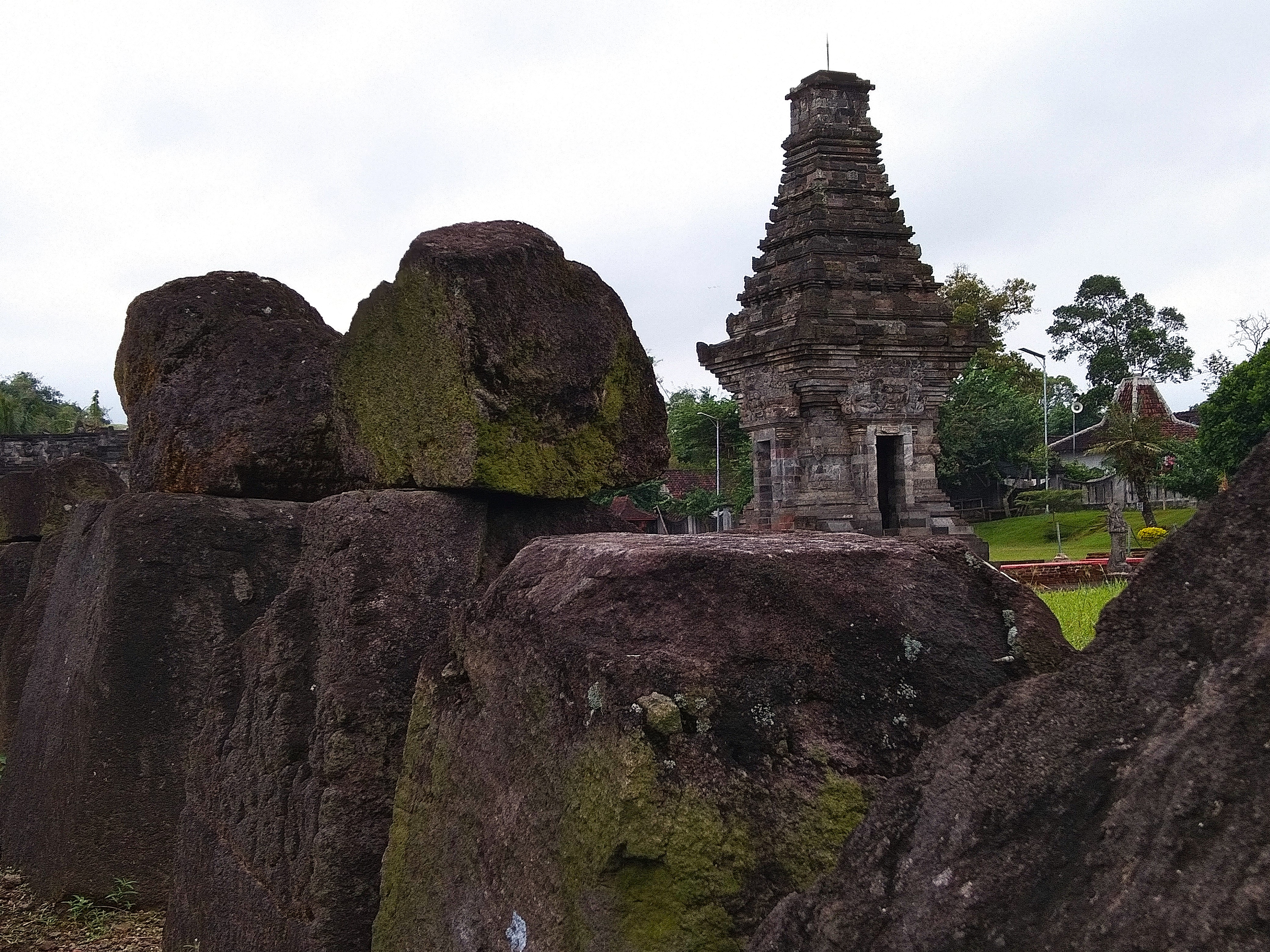
Penataran Temple, A State Built from Stone, Time, and Power
Between Malang and Yogyakarta lies a place often passed without truly being seen.
Yet here, the idea of a state once spoke – not through speeches, but through stone.
Penataran Temple is more than an ancient site.
It is an open political archive, built not by a single king, not by one dynasty, and never for just one generation.
For nearly two and a half centuries, this complex grew slowly, as power shifted from Kediri to Singhasari, and later to Majapahit.
There was no rush, no obsession with quick completion.
What endured instead was continuity – a sign that strong authority does not hurry, and a confident state does not need to be loud.
To walk through Penataran is to read how the ancient Javanese state functioned.
Its reliefs are not merely cosmological or mythological stories; they are narratives of political legitimacy: the king as guardian of cosmic balance, the state as an extension of universal order, and sacred space as a tool to affirm political stability.
When Singhasari expanded Penataran, they did not destroy the legacy of Kediri.
They extended it – a subtle yet powerful political strategy: shaping the future without erasing the past. And when Majapahit reached its height, Penataran was not turned into a monument of triumph. It was allowed to remain “enough.” As if a great state did not need to shout for recognition.
Even today, Penataran is not crowded.
There are no loudspeakers, no hurried streams of visitors.
And that is precisely its strength for those travelling from Malang and Bromo toward Yogyakarta.
This is not a place to kill time.
It is a place to understand how power can be built with patience, how politics can exist without propaganda, and how a state can be firm without being noisy.
Stopping in Blitar is not merely a pause. In a town marked by the legacy of Soekarno and the spirit of resistance embodied by Supriyadi, you absorb the calm rhythm of a retirement city, walk through villages scented with coffee and spices, and then enter Penataran Temple –
a meaningful interlude that weaves together memory, power, and time before the journey continues.
It is a transition from the natural landscapes of Bromo to a world of symbols and ideas, before reaching Yogyakarta.
Here, you do not simply see a temple.
You experience a state being built, layer by layer, by people who knew they were shaping a future they would never witness.
If you are willing to walk more slowly, Penataran Temple will not merely teach you history.
It reveals how mature power chooses to whisper, calm, restrained, almost without display –
and how, because of that restraint, it endures longer than the rulers who once came and went.
Tag: adventure, banyuwangi, blitar, blitarstopover, bromo, coffe, culture, eastjava, ecotourism, familytravelers, indonesiaspicingtheworlds, jogja, karimunjawa, kotagede, local, malang, nature, ngaduman, redefineluxury, sabatokaliwuanvibes, slowtravel, soekarnolegacy, train