
Malang Beyond Its Colonial Facades: The People Who Keep the City Alive
In Malang, slowing down means taking the time to see how history and everyday life share the same spaces. Historic buildings preserve traces of the past, while traditional markets reveal the skills, work, and relationships that continue to shape the city today. By walking without rushing and occasionally stopping to observe, travellers can discover Malang not only through its architecture, but also through the people who call it home.
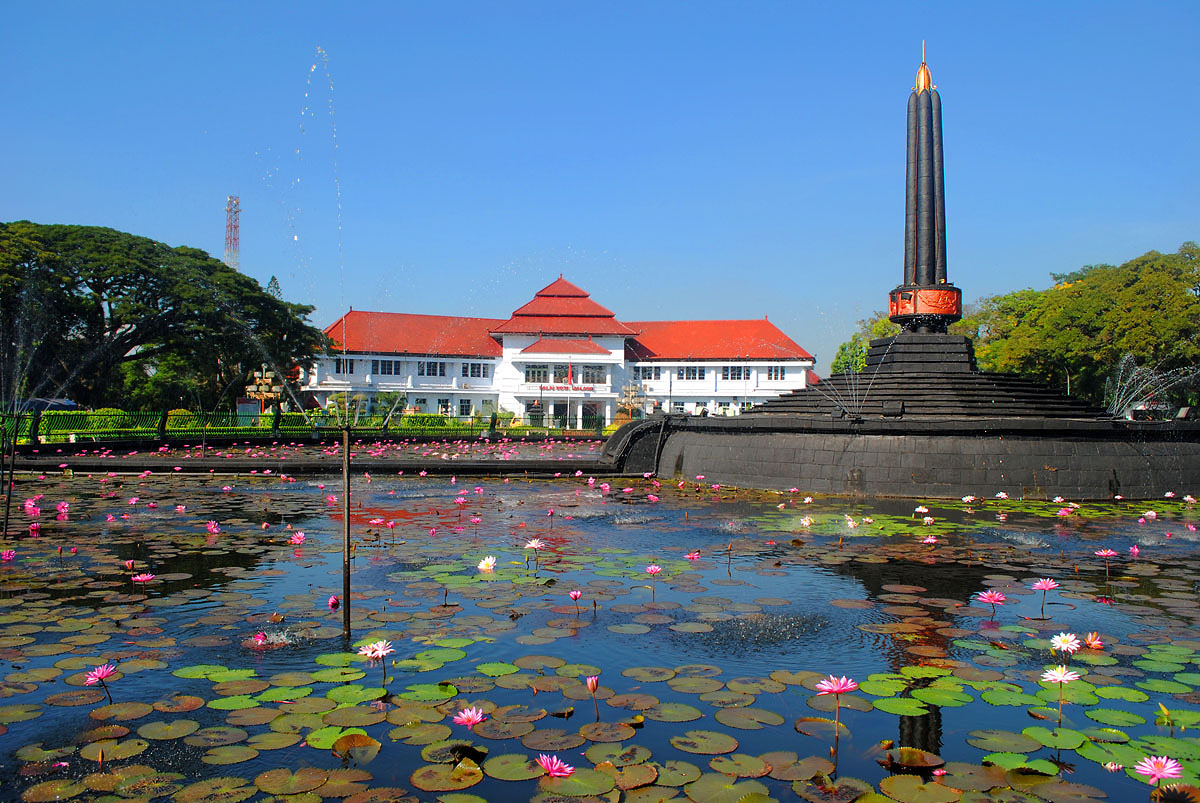
A morning in Malang might begin with a walk around Alun-Alun Tugu, one of the city's landmarks, recognised by its circular design. Across from it stand Malang City Hall and the Malang City Council building. Together, these structures reflect the character of an urban landscape shaped by history, with solid walls, distinctive façades, and an arrangement of buildings that remain part of Malang's identity today.
Yet understanding the city does not mean stopping at the buildings that catch the eye. The streets connecting its historic districts hold a broader story, including the lives of people who pass through, work in, and carry on their daily activities in these surroundings.
From Jalan Kahuripan towards Kayutangan, traces of historic architecture appear in different forms. School complexes, a hotel featuring Indian architectural influences, and older buildings reveal the city's architectural diversity. Among them, Kayutangan Church, also known as the Sacred Heart of Jesus Church, stands out as one of Malang's distinctive visual landmarks.
Built in 1905, the church has two towers that shape its recognisable silhouette in the Kayutangan district. Its significance, however, extends beyond its appearance. The building continues to serve as a place of worship for the Catholic community, keeping its historical heritage connected to the lives of people today.
From here, the journey can continue towards Jalan Idjen, an area that reveals another side of Malang's urban development. Trees shade the road and pavements, while colonial-era buildings line the streets. Morning light filtering through the leaves, together with flowers along the roadside, creates an inviting atmosphere for a leisurely walk.
In Malang, history does not always have to be found behind museum doors. Some of it remains along the streets people travel every day.
Behind the historic buildings are people who experience the city in their own ways. Some pass through its older streets on their way to work, while others open their stalls, tend to plants, or trade in traditional markets.
At Pasar Burung, the bird market, and Pasar Bunga Splendid, the flower market, everyday life becomes more tangible. Traders meet customers face to face, explain their goods, and share the knowledge they have acquired through their work. A bird seller may know the characteristics of a particular species, while a flower seller understands how to arrange and care for plants to keep them looking their best.
For travellers willing to spend a little more time, these people become more than individuals encountered along the way. They are part of Malang's story, with the work, skills, and experiences that shape the city's everyday life.
Malang is often remembered for its colonial architecture, leafy streets, and historic districts. The city was once associated with the nickname Paris van Java, evoking grand buildings, landscaped gardens, and a blend of historical heritage and modern life.
One way to read this history is to observe how older buildings continue to be used today.
Kayutangan Church, for example, was designed by architect Marius J. Hulswit in the Neo-Gothic style. Its soaring structure, large windows, and twin towers give it a distinctive architectural character. Its design also differs in certain respects from conventional Gothic churches, including a relatively simple structural arrangement without the flying buttresses commonly associated with Gothic architecture.
Yet the life of this building extends beyond the history of its design. Its continued use as a place of worship shows how architectural heritage can remain part of a living community rather than becoming an object admired only from the outside.
A similar story can be observed along Jalan Idjen. The district reflects the ideas of Thomas Karsten, a Dutch architect who contributed to urban planning in the Dutch East Indies. Development along Jalan Idjen took place between 1935 and 1960, when the area was initially planned as a residential district for government officials.
Today, its buildings and tree-lined streets reveal the relationship between past urban planning and present-day life. The boulevard offers more than visual appeal; it remains part of the city's living urban environment.
After exploring these historic districts, traditional markets offer a different perspective.
At Pasar Burung Splendid, the calls of different birds mingle with conversations between traders and visitors. Cages stand in rows as people observe the birds, discuss their characteristics, or exchange knowledge about their care. These activities reveal a level of skill and attention that may go unnoticed by those who simply pass through.
Pasar Bunga Splendid offers another atmosphere. Flowers and plants are arranged in appealing combinations of colours. Their fragrances may encourage someone to pause, lean closer to smell a bloom, or ask a seller about a plant that has caught their attention.
In both markets, the experience of the city emerges through direct interaction. Knowledge is passed along through conversation, work unfolds in front of visitors, and relationships between sellers and buyers remain part of everyday life.
From historic buildings to traditional markets, Malang reveals two complementary sides of its identity. Architecture helps us understand the traces of the past, while the activities of residents show how the city continues to live and evolve.
Understanding Malang only through its historic buildings means seeing just part of the city's story. Architecture preserves traces of time, but the lives of residents give meaning to the spaces that remain in use today.
Kayutangan Church and the Jalan Idjen district reveal how the past continues to exist within the urban landscape. Meanwhile, Pasar Burung Splendid and Pasar Bunga Splendid reveal everyday life through work, skills, and human interactions.
These two sides do not need to be separated. Historic buildings and traditional markets both contribute to Malang's identity, even though each offers a different kind of experience.
For travellers, this shift in perspective can make a visit more meaningful. Walking past an old building becomes an opportunity to notice its architectural details and reflect on the history that shaped the city. Stopping at a market opens a window into the lives of people who preserve their skills and carry on their work.
Not every story needs to be understood in a single visit. Sometimes, by paying closer attention, travellers begin to realise that a city is not only about what has been built, but also about how people live within it.
Perhaps one morning, you will walk along Jalan Idjen, letting the shade of the trees guide your steps before continuing towards Kayutangan. You may pause in front of an old building, notice its architectural details, and then make your way to a traditional market.
There, your attention might shift from the buildings to a flower seller arranging a display or a trader sharing what they know about birds. A brief conversation may not reveal the whole story of Malang, but it could offer you a different way of seeing the city.
When you continue your journey, what stays with you may be more than memories of beautiful buildings. It may also be the realisation that a city's life continues between the history it inherits and the everyday experiences of the people who inhabit it.
Sabato Kaliwuan opens access for travellers to discover Malang through the relationship between its history, urban spaces, and local communities. As a mediator and storyteller, Sabato Kaliwuan connects travellers with the stories behind the places they encounter. Its role goes beyond pointing out historic buildings or traditional markets; it creates room for observation, conversation, and a closer understanding of local life.
Through a personal and unhurried approach, Sabato Kaliwuan becomes a delightful companion, helping travellers see Malang through more than what appears on the surface.
Sabato Kaliwuan, A Delightful Companion for Your Journey.
More than a curated travel experience, Sabato Kaliwuan is an access point to authentic villages, meaningful encounters, and local stories that reveal the face of East Java beyond its destinations. Through conversations with coffee farmers, local fishermen, artisans, and those building their communities, every journey becomes an opportunity to understand how villages continue to adapt, preserve their cultural heritage, and create new futures.
A building may stand for decades, but its meaning lies in more than its age or architectural beauty. The same is true of a market: its value is not limited to the goods being sold, but also lies in the knowledge, work, and human relationships that continue to unfold there.
Malang invites us to see how the past and present can exist side by side. Historic buildings preserve traces of the city's journey, while the lives of residents continue to give colour and meaning to the same spaces.
Perhaps knowing a place does not always mean understanding every story it holds. Sometimes, it is enough to make time to observe, listen, and understand the lives unfolding around us.