
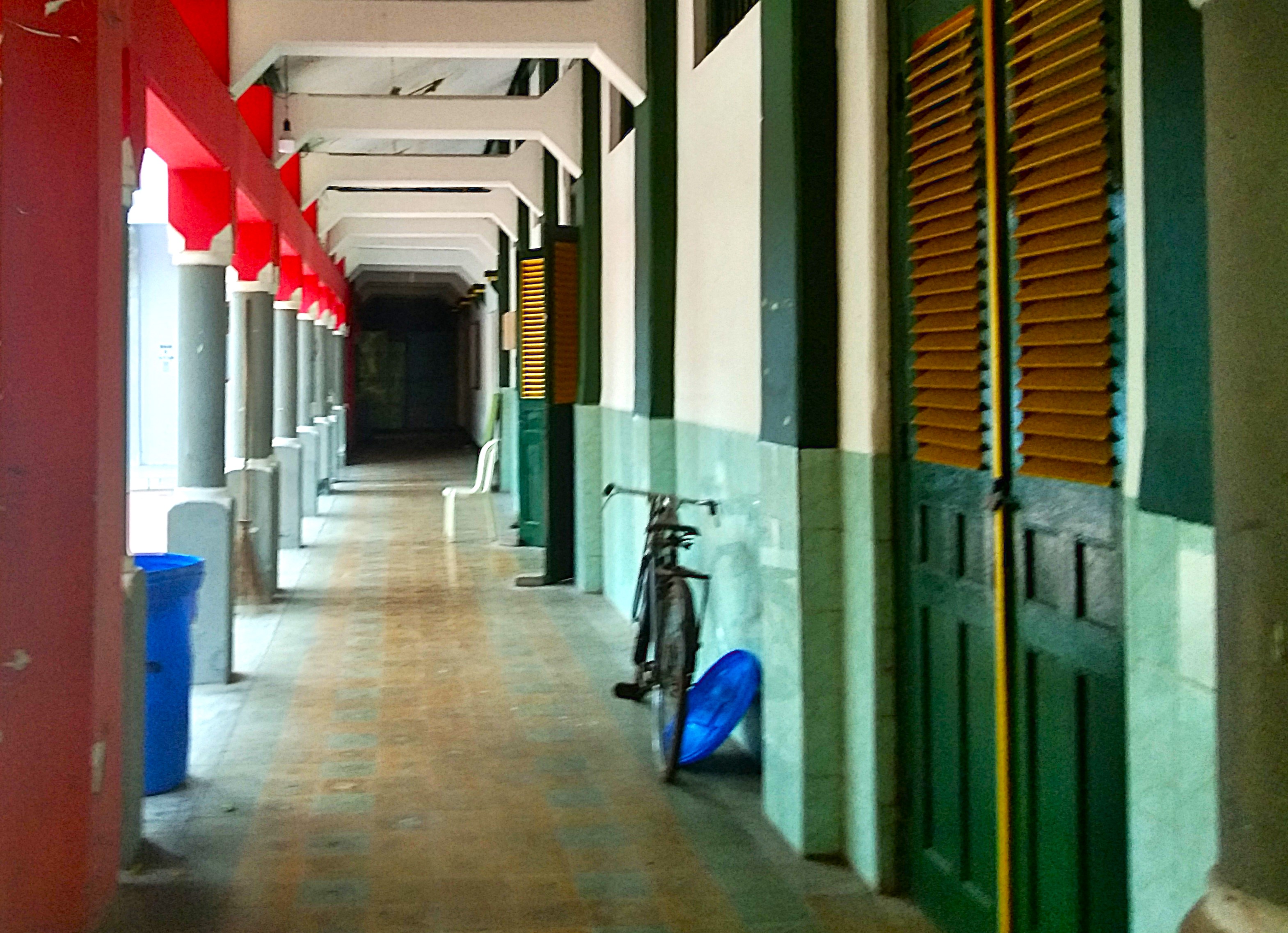
Corridors of Memory: From Military Barracks to Classrooms of the Future
Behind simple walls and timeworn windows that still welcome the morning sun, stand the buildings of SMKN 3 and SMPN 5 in Blitar, structures that are far more than ordinary classrooms. If these walls could speak, they would whisper tales of resistance, echo the footsteps of young soldiers, and sing of a future shaped by the dreams of today’s students.
Here, on the southern side of the school complex, once stood barracks, solid, quiet, and full of purpose, as part of the PETA Army Headquarters, a cornerstone of Indonesia’s struggle for independence. One of these rooms, now used for teaching, was once the temporary shelter for young revolutionaries. It is even said that Sudancho Soeprijadi, the legendary commander of the PETA rebellion, once slept within these very walls. Imagine: in a room barely larger than 2 x 1.5 meters, courage was born, and a vision for a free nation was forged.
Originally built in 1910 to house MULO (Meer Uitgebreid Lager Onderwijs) students during the Dutch colonial era, the building stretches north to south, once featuring a central corridor connecting the western and eastern barracks. Today, that corridor has vanished, its northern end obscured by new construction, its southern stretch transformed into a school canteen. Yet remnants remain: a graceful archway now filled with cement, or replaced by a rectangular door, silent witnesses to a bygone era.
Following independence, the site was transformed from a military facility into an educational hub. Thin walls separating the tiny barracks were broken down to create larger, more practical classrooms. Much has changed, yet the soul of the building endures: a place of learning and transformation. And therein lies its unique charm, a slow evolution that honors history while nurturing the future.
Not far away, a second building—also dating back to 1910 and now part of SMPN 5- shares the same colonial heritage. Its distinct corridor, old wooden windows, and doors remain intact. Although ceramic tiles have been added to half the walls and new structures, such as scout rooms, storage areas, and a teacher’s parking canopy, now frame the old façade, the spirit of the past still lingers in the air. Walk the corridor, and you may feel time slow down, as if inviting you to step into the lives of students and soldiers from a century ago.
This seamless fusion of history and progress makes the site truly special. It is not merely a place to remember, but a living legacy, still vibrant with activity and purpose. For travelers, especially those drawn to stories of colonial architecture and national struggle, a visit here is more than a tour. It is a journey through time, a passage through the corridors of memory where bravery once bloomed and hope continues to grow.
Tag: blitar, blitarstopover, culture, familytravelers, local, nature, sabatokaliwuanvibes, slowtravel, soekarnolegacy, train