
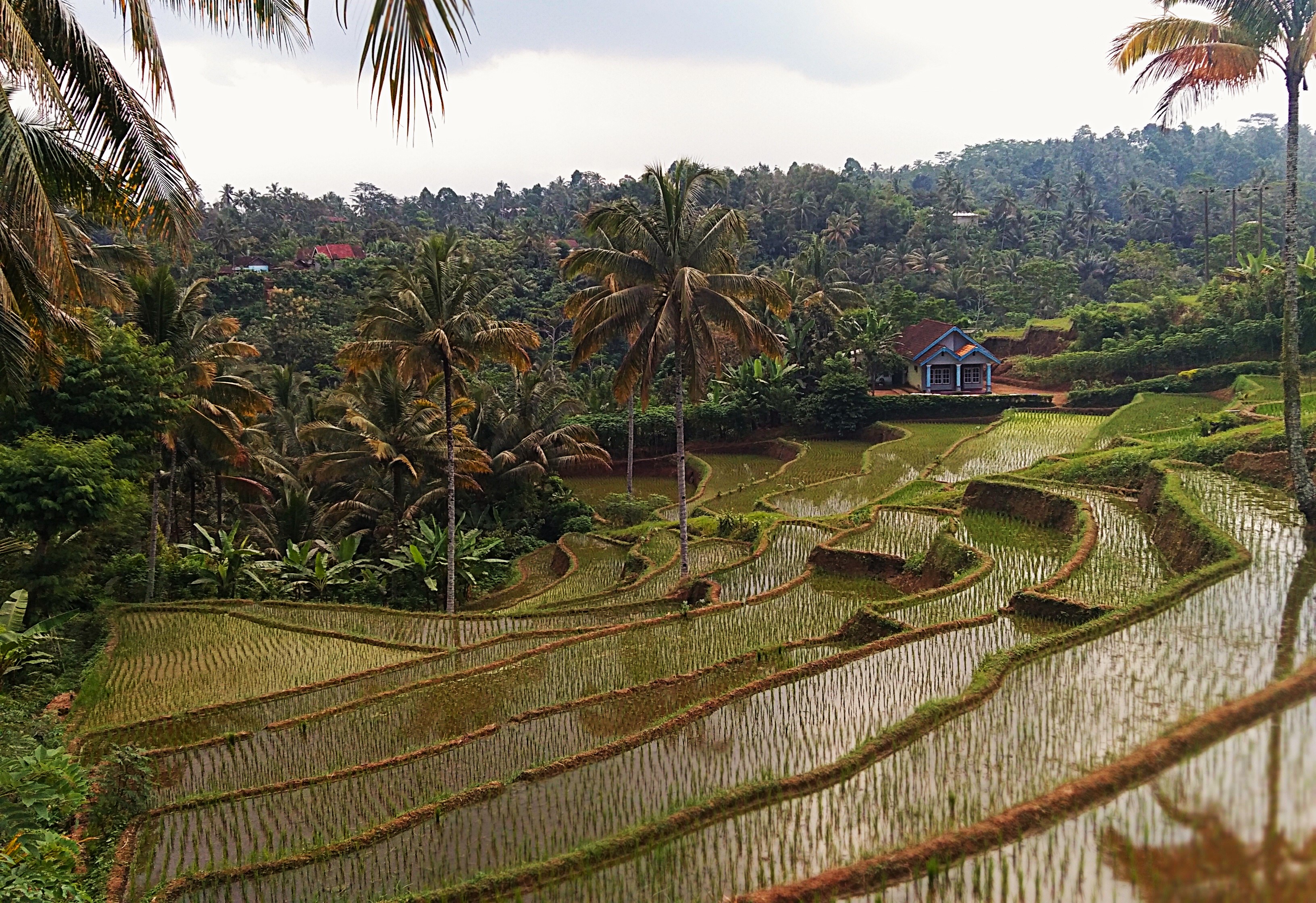
Blitar: A Resting Place for Weary Wanderers
“Blitar: Tracing Soekarno Through Taste”
As the train or your car drifts away from Malang Station, your tired eyelids finally close against the window glass. Your body still feels heavy after waking up at 2:00 a.m., an hour no traveler would willingly choose, just to chase the sunrise at a viewpoint fought over by many. Jeep drivers had raced one another up the dusty trail, competing for the closest parking spot to greet the rising sun.
But that is the nature of traveling across Java.
Tiny challenges become part of the story. The island rewards exhaustion with surprises; its routes can be tiring, yet its villages hold countless hidden charms, most tucked away on the slopes of volcanoes. What you see on television or social media is only a shadow. What you feel on the journey is the truth.
Images linger in your mind: the smoking peak of a mountain, clouds of dust lifted by hikers’ footsteps and horses’ hooves, the sky igniting at sunrise, and jeeps roaring endlessly. These memories pull you back to Kawah Ijen, where you stood still, reflecting, listening to your own thoughts until a soft whisper inside finally said,
“Enough. I want to be still”
And when that whisper grew stronger, the road led you somewhere rarely mentioned in trendy travel groups: Blitar.
A small town resting peacefully within its local culture, surrounded by green fields and gentle hills. There are no long lines, no influencers posing for the perfect shot, no blaring horns.
Blitar is not a tourist city.
It is a resting place, a place for souls tired of running.
Tradition survives here in its purest form, especially in its markets. There are markets selling daily necessities, herbs, spices, vegetables, and a different kind of market entirely: the traditional livestock market, raw and honest.

Dimoro Livestock Market, Where Sounds, Dust and Tradition Merge.
As the early sun hangs low and the morning air is still cool, Dimoro Livestock Market slowly awakens. The growl of motorbikes, cars, and heavy trucks blends into the day’s opening rhythm, as if all of them are vying for space among the traders, buyers, and curious visitors.
Behind bamboo fences, roosters crow, geese honk, and ducks quack loudly, each announcing their presence. Not far away, goats bleat in a chaotic chorus, competing with the uproar of the birds. On the other side, large cattle let out deep, echoing bellows, like the sound of a tuba rolling across the morning air.
This is not just a market.
This is the heartbeat of rural Java, where laughter, sweat, and hope meet in every transaction.
Dimoro is the pulse of the local economy, a place where tradition lives from one pasaran day to the next.
Blitar itself is known for its history, but the spirit of its past lives on in the way people preserve these markets. There are two traditional markets here: the daily market, and the livestock market, two faces of life moving side by side.
The Livestock Market, A Different World
The livestock market is divided into three sections:
1. Poultry
Chickens, ducks, geese, pigeons, all forming a lively rural symphony.
2. Goats
Separated only by a narrow road, the goat area is filled with the scent of grass and hay.
3. Cattle
A few meters away, trucks from other towns arrive with large cows, making this the busiest area.
The market does not open daily.
It only opens on Javanese market days – “pasaran”: Legi, Pahing, Pon, Wage, and Kliwon.
Reaching it at the right time means witnessing a cultural moment that cannot be repeated.

The Daily Market, Aroma, Color and Everyday Life
At the daily market, fresh vegetables are stacked in vibrant rows, fruits glisten with morning dew, and spices release fragrances that define Javanese cuisine.
This market breathes before dawn. By 4:00 a.m., while most people are still asleep, it is already filled with chatter, bargaining, laughter, and quick footsteps. By around 9:00 a.m., the noise softens, leaving behind aromas and stories.
The Culture of A Simple Greeting
Step out of the market, and Blitar slows down again.
Animal sounds fade, replaced by familiar Javanese greetings that warm the ear.
Older men are respectfully called “Pakdhe”.
Women are greeted with “Ning” or “Mbak”.
Men of similar age are called “Cak” or “Mas”.
These greetings float naturally through village streets, food stalls, and small coffee shops, places where strangers talk as if they’ve known each other for years. A warung kopi is not just a place to drink coffee; it is the heart of conversation, a warm corner where stories and laughter are shared freely.
Every morning, people pass by carrying chickens, banana leaves, or Nasi Ampok, Blitar’s traditional corn rice. Served on banana leaves with young jackfruit curry, crunchy long beans, fried salted fish, and hot tempe mendoan, it is simple food that somehow fills the heart.
The smell of robusta coffee drifts from kitchens as dawn breaks. In Blitar, coffee is more than a drink, it’s a morning greeting, a midday pause (known locally as “Laut”), and a companion at night.

Nasi Ampok
Exploring Blitar With The Locals
After your morning coffee, you can explore Blitar by bicycle with Sabato Kaliwuan, a local guide.
Istana Gebang
The house where young Soekarno spent his school holidays. With its Indische architecture and wide verandas, it feels more like visiting a relative’s home than a museum.
Kebon Rojo
During the Dutch colonial period, this place served as a botanical laboratory. Today, it has transformed into a city park lined with colonial-era trees, calm, shaded, and soothing, like a lullaby whispered by rustling leaves.
Ancient Temples: Penataran or Sawentar
Small roads framed by rice fields lead you there, occasionally crossed by slow-moving buffalo.
At Candi Sawentar, you are often the only visitor, just birds and wind brushing ancient reliefs. Time seems to pause.

Penataran Temple
Sumberurip, Blitar's Best Kept Secret.
And if your heart longs for deeper stillness, just twenty minutes from town lies Sumberurip, a village that feels like another world. Resting on the western slope of Mount Kawi, the air shifts: cooler, fresher, scented with roasted coffee and dried spices, cloves, pepper, vanilla, cardamom, ginger, nutmeg.
Homes are lined with living fences, and smiles are as gentle as the coffee being brewed.
Here, you can join villagers in gardening, roasting coffee the traditional way, or simply sitting on a terrace listening to old folklore stories. Or you can remain completely silent, letting the aroma of coffee and spices wash away the last traces of weariness.
Blitar is not a place designed to make you shout “Wow!” at every corner.
Blitar is where you finally exhale, loosen your shoulders, and whisper to yourself:
“So this is what peaceful feels like”.
And in Sumberurip, that peace even smells like coffee and spices.

Tag: adventure, banyuwangi, blitar, bromo, coffe, culture, eastjava, ecotourism, indonesiaspicingtheworlds, karimunjawa, kotagede, local, nature, ngaduman, sabatokaliwuanvibes, soekarnolegacy, traditional, jogja