
Before the Boats Leave, the Fishermen Read the Sea from the Geladak
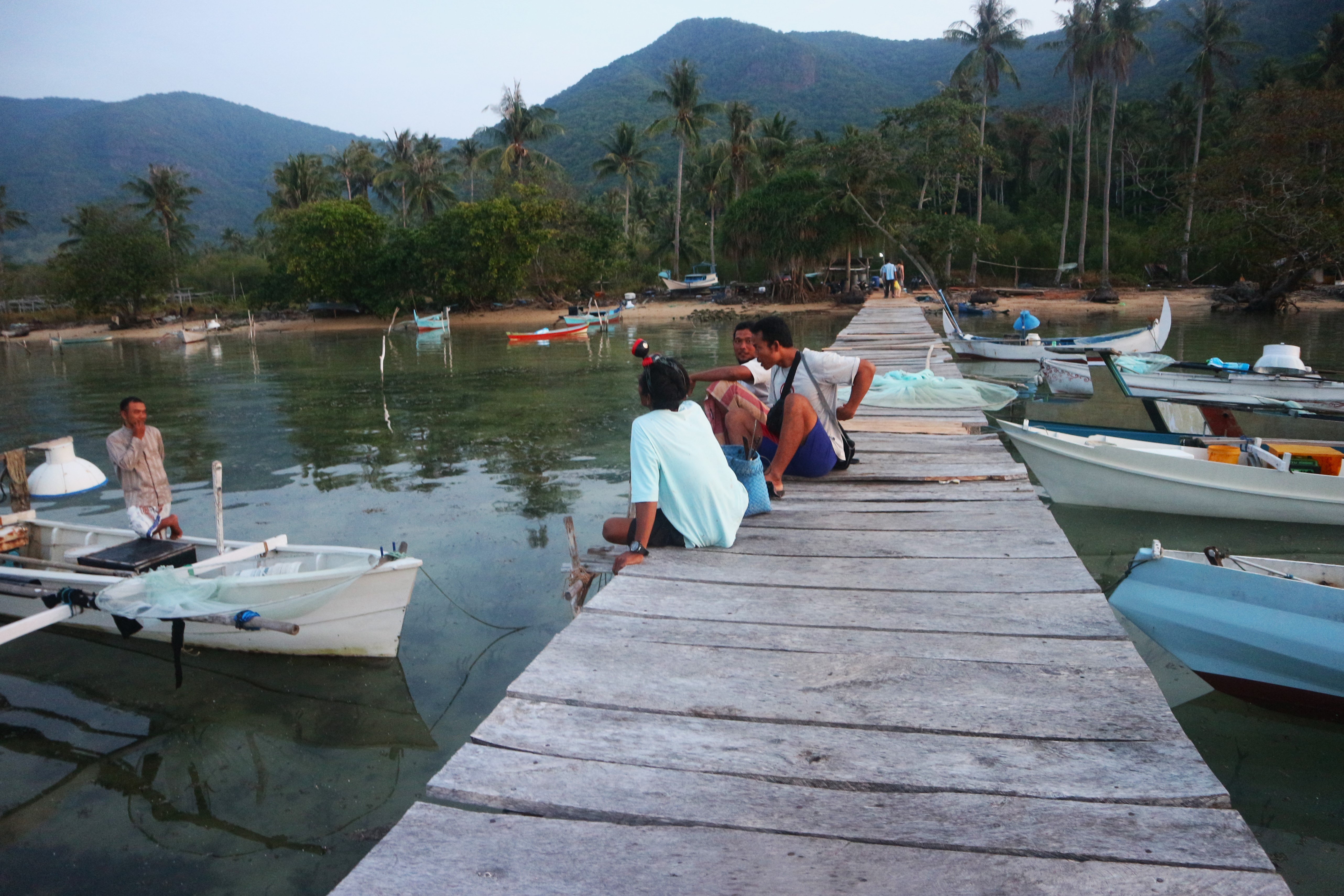
In Nyamplungan, afternoon is the time when a fisherman's day is not quite over. On the geladak, conversations about the wind, the direction of the boats, and the fish become part of an unwritten preparation. This is where slow travel finds its meaning: not by slowing down the fishermen's lives, but by giving us time to observe how knowledge, experience, and decisions emerge from everyday life.
Afternoon is a meaningful time for the fishing community of Nyamplungan Village, Karimunjawa.
The long geladak becomes a place for gathering and lingering conversations after the day's activities at home, from morning until midday, have come to an end. Along the shore, 17 coconut trees seem to mark the direction from which the wind is blowing. The lower, shady trees offer a place to rest, while the hill behind them seems to reflect the resilience and determination of the Nyamplungan community.
This wooden geladak is where the fishermen leave from, and where they return.
Nine traditional boats lie moored nearby, waiting for their fishermen to take them back to sea.
For the fishermen, sitting on the geladak in the afternoon is not simply a way of waiting for evening.
They exchange information and predictions about the direction of the wind, the movement of their boats, and the kinds of fish they may catch. Each has a different direction and destination, yet their experiences at sea become knowledge that can be shared with one another.
The catch from the previous day, together with what they observed while fishing, becomes part of the conversation. What one fisherman sees and learns at sea can become useful information for another.
Through these conversations, the sea begins to be read before they actually leave.
After the Isha prayer, at around 7:30 p.m., the fishermen leave their homes and families and head toward their boats. They carry food and warm drinks for the night's journey.
The sea is a vast, seemingly flat expanse. Yet its openness does not mean that a boat needs no direction. Quite the opposite. On such a wide expanse, the hands and eyes must remain attentive to changes in the water, reading them to determine where the rudder should turn.
The boats move into the night. Waves rock the wooden boats in rhythms that continually rise and fall. The engine at the back runs at a steady pace, almost as if encouraging the boat to keep moving forward.
Along the journey, prayers accompany them as they make their way toward the right place to stop.
And when the boat finally stops, the fishermen begin their work.
We may watch how they work, enjoy the gentle movement of the boat on the waves, or try fishing for squid with a simple fishing tool.
What the fishermen take to sea is not only a boat and the tools they use to catch fish.
They also carry knowledge shaped by experience, observation, and conversation. What they learned yesterday may become a consideration for the following day. What one fisherman observes can become knowledge for another.
Their journey to the sea, then, begins long before the boat leaves the geladak.
It begins with conversation.
Perhaps one afternoon you will sit with them on the geladak, without rushing to understand what they are discussing.
Perhaps later that evening you will find yourself in a traditional boat, letting the waves carry the conversation out to sea. When the boat stops, you may simply sit and watch how a fisherman goes about his work.
Then, looking up at the sky from the middle of the sea, a simple question may arise: is the sea really as vast as the sky above?
And in a sea this wide, why is there always a fish that can still be caught?
Sabato Kaliwuan creates access to the everyday life of the fishing community in Nyamplungan.
Sabato Kaliwuan connects travellers with local people and opens the door to conversations, observations, and everyday rhythms of the fishermen's lives.
As a mediator, storyteller, and delightful companion, Sabato Kaliwuan helps travellers come closer to this way of life through personal, story-based encounters.
Sabato Kaliwuan, A Delightful Companion for Your Journey.
More than a curated travel experience, Sabato Kaliwuan is an access point to authentic villages, meaningful encounters, and local stories that reveal the face of Central Java beyond its destinations. Through conversations with coffee farmers, artisans, and those building their communities, every journey becomes an opportunity to understand how villages continue to adapt, preserve their cultural heritage, and create new futures.
At sea, there are not always visible markers to guide the way. Direction can be read through changes in the water, the wind, experience, and what has been learned before.
Perhaps this is how a place slowly reveals itself, not through what appears on the surface, but through the knowledge of the people who live it every day.