
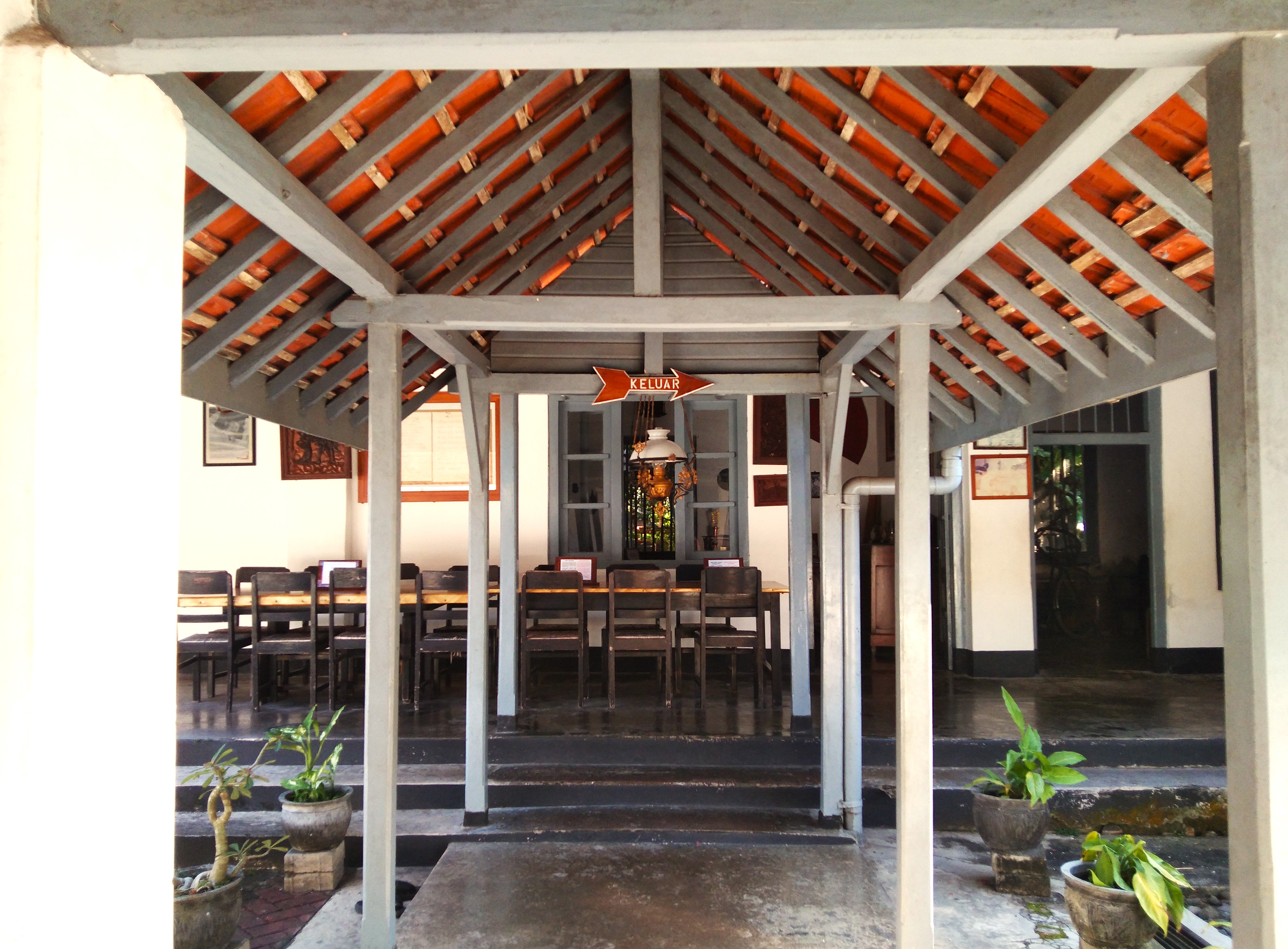
At the Long Table, Aesthetics Were Once Brewed
Within the walls of Istana Gebang, there is one room that is neither the grandest nor the most formal—yet it is the most human of all.
The kitchen.
A place where a small flame burns, the aroma of coffee drifts, and conversations flow without protocol.
It was there that Soekarno felt most at home.
A long dining table stretches along the kitchen wall, made of old wood that has absorbed the traces of time. At this table, Bung Karno would often sit for hours with his brother-in-law. There were no speeches of resistance, no slogans to ignite the masses. What unfolded instead were warm conversations, about architecture.
They spoke not merely of lines and structures, but of feeling.
Of how a house should breathe.
Of how light should enter with courtesy.
Of how space can shape the character of those who live within it.
For Soekarno, architecture was never an inanimate object.
It was a language, a language of aesthetics and philosophy.
A building, like a nation, had to possess a soul.
In the pauses between their conversations, cups of coffee gently released their steam, filling the room with warmth. It is said that one of Bung Karno’s favored coffees came from Bogor: Kopi Liong Bulan, a legendary brand that has existed since 1945. Bitter and full-bodied, with a distinctive strong aroma, it was often served as kopi tubruk and has long been part of Bogor’s culinary culture. An old Nusantara coffee with a gentle yet layered character—slightly acidic, floral in fragrance, and lingering on the palate. Much like Soekarno’s own thoughts—not explosive, but enduring.
Imagine a morning at Istana Gebang: the soft clink of a spoon against porcelain, the warm scent of Javanese coffee, and a discussion on architectural beauty slowly unfolding into a philosophy of life.
In this kitchen, we encounter another side of Soekarno, not only as a great orator and revolutionary leader, but as a lover of beauty, a thinker who believed that independence must also be reflected in how we shape spaces and nurture sensibility.
The kitchen of Istana Gebang is not merely a domestic room.
It stands as a witness that great ideas are often born not on podiums, but at long dining tables,
accompanied by warm coffee and honest conversation.
Alongside Sabato Kaliwuan—A Delightful Companion for Your Journey, you will discover that Istana Gebang does not seek praise, it invites you to experience it.”
Step into Istana Gebang, and then pause for a moment in that kitchen. For it was there that aesthetics, architecture, and humanity once sat at the same table.